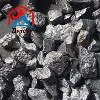
Where Residues on Silicon Carbide Products Come From
Silicon carbide is chemically robust, which is exactly why residues on its surface are so troublesome. The material resists most reagents, so any foreign phase that remains attached during production tends to stay attached through crushing, shaping and firing. In practice three families of residue appear:
Metallic iron and iron oxides from crushing media, milling equipment, screening decks and handling systems.
Free silicon and surface silica left from the reduction process or formed during high-temperature use, which changes the surface chemistry of the grain.
Fine adhering dust and cured binder from shaping, machining or previous processing steps.
Each family responds to a different reagent, so a single cleaning method rarely solves every case. Identifying the residue first is the cheapest step in the whole programme.
Acid Treatment for Metallic and Iron-Bearing Residue
Acid washing targets metallic iron, iron oxide and other acid-soluble contamination. Hydrochloric acid is the usual workhorse because it dissolves iron and its oxides readily while leaving silicon carbide essentially untouched.
The practical sequence is straightforward:
Charge the silicon carbide into a corrosion-resistant vessel with the dilute acid solution, keeping enough liquid to fully wet and suspend the grain.
Apply gentle heat and agitation. Warm solution penetrates the pores and reaches contamination that static soaking misses; strong agitation keeps heavy grain from settling and shielding residues.
Hold the batch until gas evolution and colour change stop, indicating that soluble iron has been taken up.
Drain the spent liquor and rinse before the dissolved iron can reprecipitate onto the grain as the pH rises.
Where surface silica or free silicon must also be addressed, a fluoride-containing acid mixture is used instead. These mixtures attack silicon and silica but are aggressive to glass, skin and many metals, so they require dedicated plastic or lined equipment, full personal protection and controlled waste handling.
Alkali Treatment for Free Silicon and Surface Silica
Alkali treatment covers the residues that acid leaves behind. A sodium hydroxide solution reacts with free silicon and with surface silica, converting them into soluble sodium silicate that can be washed away, and it also helps disperse fine adhering dust.
Aqueous caustic: the milder route. Hot sodium hydroxide solution loosens dispersed silicon and silica from the grain surface and, with agitation, cleans open porosity without severe attack on the bulk material.
Melt or high-concentration caustic: a much stronger attack used when a thin layer of free silicon must be removed from the surface. Reaction is fast and strongly exothermic, so it demands controlled addition, cooling and strict operator protection.
Contact time: alkali attack is not perfectly selective. Extended contact roughens the grain surface and can generate fines, so the endpoint should be set by analysis rather than by a fixed clock.
Combining Acid and Alkali Steps, and Mechanical Alternatives
Because the residue families differ chemically, a two-stage sequence is common: acid first to remove metallic iron, rinsing in between, then alkali to remove free silicon and silica, followed by a final neutralising rinse. Doing the stages back to back without intermediate rinsing simply raises reagent consumption and can reprecipitate dissolved iron.
Where contamination is largely mechanical, physical methods are cheaper and should be tried first:
Ultrasonic cleaning in water or a mild reagent, effective for dust held in crevices and blind holes.
Attrition scrubbing or tumbling with the grain against itself to break loose weakly bonded surface layers.
Gravity, magnetic or flotation separation on the powder stream to remove dense metallic particles before any chemical step.
Controlled thermal treatment to burn off organic binder or carbonaceous residue, with the caveat that heating in air can oxidise the silicon carbide surface itself.
Rinsing, Neutralisation and Drying
Most cleaning failures happen after the chemistry, not during it. Soluble salts left in the pore structure crystallise on drying and reappear as residue, and residual acid or alkali reacts with the grain over time.
Rinse counter-currently, using fresh water on the last stage, so that each rinse lowers the dissolved salt load rather than moving it around.
Neutralise acid-washed batches with a mild alkali wash and alkali-washed batches with a mild acid wash, then rinse again to neutral.
Monitor the rinse water rather than guessing: pH near neutral and a low conductivity reading on the outlet water are practical endpoint criteria.
Dry promptly in a clean, filtered oven. Slow air drying in a dusty workshop undoes part of the cleaning effort.
Process Overview and Verification
| Stage | Typical medium | Purpose | Key precaution |
|---|---|---|---|
| Pre-screening | Water, ultrasonic or attrition | Remove loose dust and weakly bonded layers | Do not reuse dirty water across batches |
| Acid wash | Hydrochloric acid solution | Dissolve metallic iron and iron oxide | Rinse promptly to avoid iron reprecipitation |
| Alkali wash | Sodium hydroxide solution | Remove free silicon and surface silica | Limit contact time to control surface roughening |
| Neutralising rinse | Fresh water, counter-current | Remove soluble salts and residual reagent | Verify pH and outlet conductivity |
| Drying | Clean filtered oven | Prevent salt crystallisation on grain | Avoid dusty or contaminated drying air |
| Verification | Analysis and visual check | Confirm the batch meets the specification | Keep a retained sample per batch |
Verification should combine a quantitative check with a simple visual one. Mass loss across the cleaning sequence shows how much material was removed; a chemical analysis of iron, free silicon and silica confirms which fraction it was; and a check of the rinse water pH and conductivity confirms that nothing soluble is left behind. Surface appearance under low magnification catches the case where residues remain physically trapped in porous grain even though the bulk analysis looks acceptable.
Frequently Asked Questions
Q: Which treatment removes residue from silicon carbide more effectively, acid or alkali?
They remove different residues. Acid treatment dissolves metallic iron and iron oxide, while alkali treatment removes free silicon and surface silica. Residue identification should decide the route, and in many cases a two-stage sequence is needed.
Q: Why does the material become dirty again after it has been cleaned?
Usually because soluble salts remained in the pores and crystallised during drying, or because residual reagent reacted with the grain surface. More thorough rinsing, neutralisation and prompt clean drying prevent this.
Q: Can alkali treatment damage silicon carbide grain?
Extended or overly hot contact with concentrated alkali attacks the surface as well as the residue, roughening the grain and creating fines. Contact time and temperature should be set so the residue is removed without measurable loss of sound grain.
Q: Is chemical cleaning always necessary?
No. Where contamination is loose dust or weakly bonded matter, ultrasonic, attrition or separation methods are simpler and cheaper, and they leave no spent reagent to handle.
Q: How is batch cleanliness confirmed?
By combining mass loss across the process, analysis of iron, free silicon and silica content, rinse water pH and conductivity, and a visual surface check of the dried product.
Q: What is the main safety risk in these processes?
Corrosive reagents, fluoride-containing mixtures and hot caustic solutions. Lined or plastic equipment, full protective clothing and controlled treatment of spent liquor are essential for every batch.