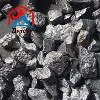
What Silica Slag Is and Where It Comes From
Silica slag is the glassy, silicon-rich by-product recovered from ferrosilicon smelting. It is collected at the tapping stage, cooled, crushed and ground, and in many plants it is further upgraded by magnetic separation or flotation to reduce metallic iron and other dense impurities. Because the material is a by-product rather than a deliberately alloyed product, its quality is decided long before the grinding mill starts: it is decided by what was charged into the furnace and by how steadily the furnace was operated.
For a buyer, that has a practical consequence. Certificates of analysis describe a shipment after the fact; the raw material chain predicts it before the fact. Understanding the chain makes it possible to ask a supplier the right questions and to judge whether a quoted lot can be reproduced month after month.
Step One: Judge the Silica Raw Material
The silica source, usually quartz or quartzite, is the single most important input. It supplies the silicon that ends up in both the alloy and the slag, so its purity and its physical form set the ceiling on slag quality.
Chemical purity: a high silicon dioxide content with low iron oxide and low alumina is preferred. Iron oxide not reduced in the furnace reports partly to the slag as metallic iron and iron-rich droplets; alumina raises the slag melting point and viscosity and makes the furnace harder to keep balanced.
Lump size distribution: the charge must be neither too coarse nor too fine. Oversized lumps react slowly and create sharp temperature gradients; excessive fines reduce bed permeability and encourage channeling of furnace gas, which produces uneven, contaminated slag.
Thermal stability: quartz that spalls or decrepitates on heating generates fines inside the furnace. Raw material that behaves well in a laboratory crucible may still fracture under industrial thermal shock, so kiln or furnace trials matter more than a bench test.
Moisture and storage: wet or muddy feedstock changes the effective charge weight and adds unpredictable water to the reaction zone. Covered storage and consistent moisture checks keep the charge calculation honest.
Step Two: Judge the Coke, Ash and Moisture
Coke is both the reducing agent and the main heat source, so it controls the furnace atmosphere and the reduction of silica. Two coke properties dominate slag quality.
Ash content. Ash is the non-carbon residue that cannot reduce anything. High ash means less carbon actually available for reduction, and the ash minerals report directly into the slag, diluting it and shifting its chemistry. A low-ash coke tightens the slag composition and improves the consistency of the tapped product.
Moisture content. Water in coke consumes heat as it evaporates, destabilises the temperature profile of the furnace and makes the charge calculation drift. A stable, low-moisture coke keeps furnace temperature steady, and steady temperature is what produces slag of uniform glassy structure instead of a mix of dense and porous material.
Fixed carbon, reactivity and size grading also deserve attention. A coke that is too reactive burns ahead of the reaction zone; a coke with a wide size spread encourages uneven gas flow. Sulfur and phosphorus in the coke must be watched as well, because they report to the alloy and, in part, to the slag.
Step Three: Judge Furnace Operation and Consistency
Two furnaces fed identical raw materials can still produce different slag if their operating practice differs. Three points of control matter most:
Temperature stability: a steady, deep electrode position and a stable burden give smooth reduction. Frequent power swings, unstable tapping intervals or an unbalanced burden produce slag with trapped metal droplets and variable structure.
Tapping and cooling routine: the way slag is tapped and cooled controls how glassy or crystalline the final particles are. Slow cooling in large masses can devitrify part of the material, and crystalline fractions behave differently from glassy ones in later grinding and use.
Contamination control: charging practice, ladle condition and the yard routine determine how much metallic iron, refractory debris and dust enter the slag stream. Once metal droplets are locked inside, later magnetic separation removes only what is exposed.
Inspection Items That Reveal Real Quality
| Inspection item | What to examine | Why it matters |
|---|---|---|
| Silicon dioxide content | Head grade and lot-to-lot variation, not a single value | Sets the usable silicon value of the slag and predicts downstream reactivity |
| Iron and iron oxide | Both total iron and visible metallic particles | Metallic iron causes hard spots, wear in milling equipment and false weight in the lot |
| Alumina content | Trend against historical lots from the same supplier | Alumina raises slag viscosity and is a marker of raw material dilution |
| Loss on ignition and moisture | Determined on the as-received sample | Exposes wet storage and unstable weighing of the charge |
| Particle size distribution | Grading curve for the intended application | Controls packing behaviour, reactivity and handling losses |
| Structure and appearance | Glass versus crystalline fraction, colour, porosity | Quick field indicator of cooling practice and furnace stability |
Sampling and Lot Grading in Practice
Quality judgement fails most often at the sampling stage rather than the analysis stage. A few hundred grams taken from the top of a stockpile cannot represent several hundred tonnes of ground material. Practical rules that make grading meaningful:
Take incremental samples across the whole face of the stockpile or, better, from the discharge stream at regular time intervals while the lot is being loaded.
Keep the sample size proportional to the lot and reduce it by riffling rather than by hand-quartering, which biases against coarse particles.
Record the sampling point, date and lot number so that a repeat complaint can be traced back to the same production run.
Retain a sealed reference sample of every shipped lot until the customer has confirmed acceptance of the next lot.
Compare each new result against the running average and range of the previous lots instead of against a single specification sheet; drift is easier to catch than a single out-of-spec value.
Applied together, the raw material review, the coke control and the operational checks turn a subjective judgement into a repeatable screening process. A supplier that can explain its silica source, its coke specification and its furnace routine is far more likely to ship a consistent silica slag than one that can only quote a certificate.
Frequently Asked Questions
Q: Can silica slag quality be judged only from a chemical analysis report?
A single analysis describes one sample. Particle structure, metallic iron content and lot-to-lot variation all influence performance, so the report should be read together with grading data and the production history behind the lot.
Q: Why does coke ash matter so much for slag quality?
Ash adds non-carbon minerals to the charge. Part of the ash reports to the slag, diluting its chemistry and raising impurity levels, while the reduced carbon availability disturbs the reduction balance of the furnace.
Q: Does a higher silicon dioxide content always mean better slag?
Not by itself. A high head grade produced from inconsistent raw materials can still deliver an unstable product. Consistency of the silicon dioxide value between lots matters as much as the average value.
Q: How should metallic iron in silica slag be controlled?
Control starts with raw material purity and furnace practice. Where metal has already been retained, magnetic separation and, in some flows, gravity or flotation upgrading can reduce the content, and the residue level should be checked per lot.
Q: What is the most common reason for a rejected shipment?
Large variation between the sampled value and the supplied specification, usually caused by poor stockpile sampling or by blending material of different production periods into one lot.
Q: How often should a supplier's slag be re-qualified?
Whenever the silica source, the coke supplier or the furnace operating regime changes, and otherwise on a rolling review of the running average and range of the delivered lots.