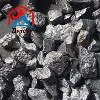
Silicon metal grade selection should start from the final application, not from the price list. Grades such as 553, 441, 421, 3303, 2202 and 1101 are separated by the maximum iron, aluminium and calcium content, and the grade designation itself carries that information: the digits read Fe, Al and Ca in tenths of a per cent, so grade 553 means Fe not more than 0.5%, Al not more than 0.5% and Ca not more than 0.3%. Silicon metal is specified in GB/T 2881. As impurity limits tighten, production cost rises because more refining and more careful raw material selection are needed, so the useful question is which grade keeps the process stable at the lowest total cost.
Read the Grade Designation Correctly
The three digits are maxima, not typical values, and a certificate of analysis should be read the same way. A supplier whose grade 441 routinely reports Fe 0.32%, Al 0.25% and Ca 0.05% is delivering a tighter product than one whose 441 sits at the limit of every element. Two lots can both be called 441 and still differ enough to change the behaviour of an aluminium alloy casting or a silicone feedstock.
| Grade | Fe, max | Al, max | Ca, max | Typical application |
|---|---|---|---|---|
| 553 | 0.5% | 0.5% | 0.3% | General metallurgical deoxidation, low grade aluminium alloying |
| 441 | 0.4% | 0.4% | 0.1% | Secondary aluminium alloys, silicones of standard quality |
| 421 | 0.4% | 0.2% | 0.1% | Aluminium alloys with tighter aluminium control |
| 3303 | 0.3% | 0.3% | 0.03% | Chemical grade silicon, silicones, electronic feedstock |
| 2202 | 0.2% | 0.2% | 0.02% | High purity chemical and photovoltaic feedstock |
| 1101 | 0.1% | 0.1% | 0.01% | Highest purity chemical use, premium feedstock |
Match the Grade to the Application
Metallurgical users, such as steel deoxidation and ferroalloy melting, are generally tolerant of iron and aluminium and can work with a coarser grade. Secondary aluminium alloy producers need controlled iron and calcium because both elements affect castability and final alloy composition, so grades 441 and 421 are common. Chemical users, such as silicone and silane producers, work with catalysts that are sensitive to aluminium and calcium, which makes grades 3303 and finer the practical starting point. Photovoltaic and electronic applications require the tightest impurity control and usually move beyond the standard grades into chemically refined material.
Size Range, Packing and Handling
Grade is only part of the specification. The size range must match the feeding system: lump material is usually supplied in ranges such as 10 to 100 mm, 10 to 50 mm or 50 to 100 mm, while granules and powder in 3 to 10 mm, 0.2 to 3 mm or 200 mesh grades suit automated dosing, master alloy production and chemical reactors. Fines content must be stated, because excessive fines cause oxidation losses and dust in manual charging. Packing options, generally one tonne bulk bags or small bags on pallets, influence handling cost and moisture pick-up, and a moisture limit is worth stating for material that will be stored for months in a humid climate.
Commercial Documents to Confirm Before Shipment
An order for silicon metal should be closed with four documents agreed in advance: the certificate of analysis for the actual lot, showing Fe, Al and Ca as measured rather than only the grade limits; the size distribution report or screen analysis; the packing specification including bag type, net weight and pallet pattern; and the loading plan with weight tolerance. Sampling should follow the agreed procedure, and where a formal inspection scheme is used, ISO 2859-1 provides sampling plans indexed by acceptance quality limit. Arrival inspection should repeat key elements on a sample drawn from the delivered lot, because a certificate covers the pre-shipment lot and does not by itself guarantee the condition of the material after transport.
Frequently Asked Questions
Q: What do the numbers in silicon metal grade 553 mean?
A: The digits encode the maximum iron, aluminium and calcium content in tenths of a per cent. Grade 553 allows Fe 0.5%, Al 0.5% and Ca 0.3%, and each digit is a limit rather than a typical analysis.
Q: Can grade 553 be used instead of grade 441 to reduce cost?
A: It can be used where the process tolerates higher iron, aluminium and calcium. In aluminium alloys and silicone chemistry the extra calcium and aluminium usually change the product or the catalyst performance, so the saving in raw material may be lost in rejected output.
Q: Which grade is normally used for silicone production?
A: Chemical users normally start at grade 3303 and move to finer grades if the catalyst system is sensitive to aluminium and calcium. The exact choice depends on the process and should be confirmed against the required impurity profile.
Q: Which standard covers silicon metal grades?
A: Silicon metal is specified in GB/T 2881, which defines the grades and their chemical requirements, together with size and delivery conditions used by producers and importers.
Q: What size range should be ordered for automatic feeding equipment?
A: Granules in the 3 to 10 mm range or powder grades are generally used for automatic dosing, while lump material in 10 to 100 mm ranges suits manual charging and bulk melting. The feeder specification should be checked before the size range is fixed.
Q: How should the delivered lot be verified on arrival?
A: Compare the lot number on the certificate with the packing list, weigh a sample of bags, screen a sample for size distribution, and analyse Fe, Al and Ca on the material actually received. Records of each check should be kept with the shipping documents.