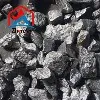
In the volatile metallurgical market of 2026, steel mills are under immense pressure to optimize raw material costs without sacrificing the chemical integrity of the melt. Silicon Carbide 88 (SiC 88), containing approximately 85%–88% SiC, has emerged as the most strategic alternative to Ferrosilicon 75 (FeSi 75) for slag deoxidation and alloying.
By analyzing the thermodynamics of the deoxidation process, we can identify three primary channels through which SiC 88 drives down production costs.
1. Superior Deoxidation Efficiency vs. Ferrosilicon
The primary role of a deoxidizer is to remove dissolved oxygen from the molten steel. While FeSi 75 relies solely on silicon, the Silicon Carbide formula (SiC) provides a dual-action reaction.
The Chemical Advantage
When SiC 88 is added to the furnace or ladle, it dissociates into elemental silicon and carbon.
- Silicon Reaction: Si + 2O → SiO₂ (Forms stable slag)
- Carbon Reaction: C + O → CO (Gas evolution)
Because carbon also acts as a deoxidizer, the "Si equivalent" of SiC 88 is significantly higher than its nominal silicon content. In practical terms, 1 kg of SiC 88 can replace approximately 1.2 to 1.5 kg of FeSi 75, depending on the oxygen level of the heat. This substitution directly reduces the volume of ferroalloys required per ton of steel.

2. Exothermic Energy Recovery: Reducing Power Consumption
One of the most overlooked cost-saving features of the SiC structure is its exothermic nature during oxidation.
Thermal Boost in the EAF
The oxidation of Silicon Carbide is a highly exothermic reaction. For every kilogram of SiC oxidized, a significant amount of thermal energy is released into the melt.
Energy Savings: Using SiC 88 as a deoxidizer can help maintain or even increase the temperature of the molten pool.
Electricity Reduction: In Electric Arc Furnace (EAF) operations, this chemical heat translates into reduced kilowatt-hour (kWh) consumption per heat.
By supplementing electrical energy with chemical energy from SiC 88, mills can shorten tap-to-tap times and lower their overall utility bills-a critical advantage given the rising energy costs in March 2026.
3. Dual-Functioning: Alloying and Recarburization
In many steel grades, both silicon and carbon must be added to reach the target specification.
- FeSi 75 Limitation: Only provides silicon; a separate recarburizer (like GPC or Anthracite) must be purchased and added.
- SiC 88 Solution: Provides both silicon (~60% Si) and carbon (~25% C) simultaneously.
By using SiC 88, procurement managers can reduce the complexity of their supply chain. You are essentially buying two alloys for the price of one. This consolidation reduces storage costs, handling labor, and the logistical expenses associated with managing multiple raw material streams.
4. Slag Conditioning and Metal Recovery
Low-purity SiC (below 90%) is an exceptional slag conditioner.
- Slag Foaming: The CO gas produced during SiC deoxidation promotes a "foaming slag" in EAFs, which protects the furnace refractory and improves arc stability.
- Improved Yield: Better slag deoxidation prevents the loss of valuable alloying elements (like Manganese or Chromium) into the slag. By keeping these elements in the metal, SiC 88 ensures a higher metallurgical yield, effectively lowering the cost per usable ton of steel.
5. Market Insight: Navigating the Silicon Carbide Price
As of March 2026, the Silicon Carbide price for metallurgical grades remains more stable and competitive than high-purity Ferrovanadium or specialty FeSi.
| Factor | Ferrosilicon 75 | Silicon Carbide 88 | Cost Impact |
| Unit Cost | High | Medium-Low | Lower initial investment. |
| Energy Impact | Neutral/Cooling | Exothermic (Heating) | Reduces electricity costs. |
| Function | Si only | Si + C + Deoxidizer | Replaces two products. |
| Metal Yield | Standard | Enhanced | Reduces waste of expensive alloys. |
6. Conclusion: The Strategic Shift to SiC 88
For a steel mill producing 1 million tons annually, even a 5% reduction in deoxidation and alloying costs can result in millions of dollars in savings. Silicon Carbide 88 is not just a "cheap substitute"; it is a technically superior metallurgical tool that optimizes energy, chemistry, and yield.
Choosing SiC 88 allows your facility to hedge against the volatility of the ferroalloy market while improving the mechanical properties of the final product.

One-Stop Metallurgical Material Factory In China
Click "Send Inquiry" to get the latest Silicon Carbide Price for March 2026 and start optimizing your melt shop's budget today!