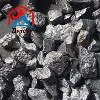
1. The Chemistry of FeSi45 Production
Ferrosilicon is produced by the carbothermic reduction of silica: carbon reduces silicon dioxide to silicon, and the silicon dissolves into molten iron to form the alloy. For a 45% silicon grade, roughly half of the alloy weight is silicon, which fixes the theoretical demand for silica and carbon. The real consumption is higher than the theoretical value because of losses and the quality of the raw materials.
2. Typical Consumption per Ton of FeSi45
| Raw Material | Typical Consumption per Ton | Role |
|---|---|---|
| Silica (quartz) | 0.8 to 1.0 ton | Silicon source |
| Carbon (metallurgical coke) | 0.5 to 0.6 ton | Reducing agent |
| Iron-bearing material | 0.4 to 0.6 ton | Iron source |
| Electricity | 4,000 to 5,000 kWh | Process energy |
These are typical ranges; actual figures depend on the grade, raw material quality and furnace efficiency.
3. Why Actual Consumption Exceeds the Theoretical Value
Silicon is lost to slag and dust during reduction, carbon is consumed beyond the stoichiometric amount because of reactivity and ash, and the iron source carries its own gangue. The silica purity sets the slag volume, and the coke quality sets the reduction efficiency. Operators manage these losses by burden control, good furnace practice and regular monitoring of the slag.
4. Influence of Raw Material Quality
Silica purity: high-purity quartz reduces slag volume and improves silicon recovery.
Coke quality: low ash and sulfur, good reactivity and correct size improve reduction and lower carbon consumption.
Iron source: clean iron-bearing material avoids adding impurities to the alloy.
Burden size: correct particle size distribution keeps the furnace bed open and stable.
5. Cost Implications
Raw material consumption is the largest part of the production cost of FeSi45 after energy. Reducing consumption per ton through burden control and furnace practice directly lowers the cost of the alloy. Buyers comparing offers should be aware that the production route and raw material quality are reflected in the price and consistency of the delivered product.
6. FAQ
Q1: How much silica is needed for 1 ton of FeSi45? Typically 0.8 to 1.0 ton of silica (quartz).
Q2: How much coke is consumed? About 0.5 to 0.6 ton of metallurgical coke per ton of FeSi45.
Q3: How much iron-bearing material is used? About 0.4 to 0.6 ton, depending on the iron content of the source.
Q4: Why is actual consumption higher than theoretical? Because of silicon losses to slag and dust, carbon reactivity losses and the gangue carried by the raw materials.
Q5: Does silica purity matter? Yes, high-purity quartz reduces slag volume and improves silicon recovery.
Q6: What is the energy consumption? Typically 4,000 to 5,000 kWh per ton of FeSi45, a major part of the production cost.