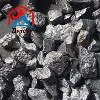
Quick Answer: FeV80 contains more vanadium per unit weight than FeV60, so you need less ferroalloy to deliver the same theoretical amount of vanadium. Your final choice should depend on your steel specification, impurity limits, alloy recovery, feeding system, handling requirements and delivered cost per unit of vanadium.

FeV60 vs FeV80 Ferro Vanadium Specification
We supply FeV60 and FeV80 ferro vanadium for steelmaking and alloy production. The main difference is vanadium concentration. FeV80 gives you more vanadium per unit weight, while FeV60 requires a larger alloy addition weight for the same theoretical V addition.
When you compare FeV60 and FeV80, do not look only at the grade name. Check the actual vanadium content together with carbon, silicon, phosphorus, sulfur, aluminum, particle size and batch consistency.
Our current reference supply specification is shown below. Final acceptance values should follow the confirmed quotation and batch COA.
| Grade | V Min | C Max | Si Max | P Max | S Max | Al Max |
| FeV60 | 60.0% | 0.15% | 2.0% | 0.06% | 0.05% | 1.5% |
| FeV80 | 80.0% | 0.15% | 2.0% | 0.06% | 0.05% | 1.5% |
Specification Note: if your steel grade requires tighter impurity control or a different vanadium range, send us your maximum C, Si, P, S and Al limits with the RFQ. We will confirm the applicable specification before quotation.
Why You Should Check Impurity Limits
Vanadium content is usually the first number you compare, but impurity limits can be just as important for your final steel chemistry.
Carbon (C) matters when you work with a narrow carbon window. If your steel specification limits carbon tightly, include the maximum C value directly in the RFQ.
Silicon (Si) and aluminum (Al) can affect your deoxidation practice and final chemistry. If your process has strict Si or Al limits, confirm them before you place the order.
Phosphorus (P) and sulfur (S) should also be controlled according to your steel specification because excessive levels can affect mechanical performance and product quality.
If your specification is tighter than our reference values, send us the exact limits instead of relying only on the FeV60 or FeV80 grade name.
FeV60 vs FeV80 Cost per Unit of Vanadium
When you compare FeV60 and FeV80 quotations, price per ton of alloy does not tell you the whole story.
You should also compare the delivered cost per unit of vanadium.
Reference formula: Delivered cost per unit of V = delivered ferro vanadium price ÷ actual V content
Using nominal 60% and 80% V contents:
| Grade | Nominal V Content | Theoretical Alloy Required for 1 kg V |
| FeV60 | 60% | About 1.67 kg |
| FeV80 | 80% | About 1.25 kg |
With the nominal values above, you need about 25% less FeV80 alloy weight than FeV60 to supply the same theoretical amount of vanadium.
For your actual furnace calculation, use the vanadium content shown on the batch COA together with your own alloy recovery rate.
How to Choose FeV60 or FeV80
Choose FeV80 when you want a more concentrated vanadium addition and lower ferroalloy feeding weight.
Because FeV80 contains more vanadium per unit weight, you can reduce the amount of alloy you need to store, handle and feed for the same theoretical vanadium addition.
Choose FeV60 when your steel specification allows it and your feeding system can handle the higher alloy addition weight.
Your final grade selection should consider:
- your required steel chemistry;
- your target vanadium content;
- your maximum impurity limits;
- your actual alloy recovery;
- your storage and feeding system;
- your freight and handling cost;
- your delivered cost per unit of vanadium.
If your steel specification directly requires FeV60 or FeV80, follow that requirement. If you only have a target vanadium addition, compare both grades from the chemistry, cost and handling sides before you order.
How to Choose Ferro Vanadium Particle Size
Choose the particle size according to your furnace addition method and material-handling system.
We can discuss common ferro vanadium lump sizes including:
- 10-60mm;
- 10-100mm;
- 10-150mm.
If you need another size range, send us the nominal size together with any limits for fines or oversize material.
If you use automatic feeding equipment, tell us your required size distribution before quotation so we can confirm whether the available material matches your feeding system.
Ferro Vanadium Packing and Export Supply
Tell us your required packing when you send the RFQ, especially if your warehouse or production line requires a specific bag weight, pallet arrangement or unloading method.
We can confirm the applicable industrial packing according to your particle size, quantity and destination.
For sea shipment, we can also discuss the required moisture-protection and container-loading arrangement before shipment.
If you require third-party inspection, we can support SGS, BV or Intertek inspection when it is confirmed as part of the order requirements.

How to Check Your FeV60 or FeV80 Batch COA
Do not use the grade name alone as your final acceptance basis.
Use the batch COA to check whether the delivered ferro vanadium matches the agreed specification for:
- vanadium content;
- carbon;
- silicon;
- phosphorus;
- sulfur;
- aluminum.
For repeat orders, keep each batch COA so you can compare chemistry consistency between shipments.
Acceptance Tip: make sure your quotation, purchase order and batch COA use the same grade name, chemistry limits and units. This gives you a much clearer basis for incoming inspection.
What to Include in Your Ferro Vanadium RFQ
| RFQ Item | What You Should Send Us |
| Grade | FeV60 or FeV80 |
| V Requirement | Minimum V value or required range |
| Impurity Limits | Maximum C, Si, P, S and Al limits |
| Particle Size | 10-60mm, 10-100mm, 10-150mm or your required size |
| Quantity | Trial quantity or regular monthly requirement |
| Application | Your steel grade or vanadium addition process |
| Packing | Required bag weight, pallet or export packing arrangement |
| Inspection | Batch COA and any third-party inspection requirement |
| Incoterm | FOB, CFR, CIF or your required trade term |
| Destination | Destination port or delivery location |
FeV60 vs FeV80 FAQ
Q1: What is the main difference between FeV60 and FeV80?
FeV80 contains more vanadium per unit weight than FeV60. You therefore need less FeV80 alloy weight to deliver the same theoretical amount of vanadium.
Q2: Is FeV80 always better than FeV60?
No. Choose the grade according to your steel specification, impurity limits, alloy recovery, feeding system, logistics and delivered cost per unit of vanadium.
Q3: How much FeV80 do I need compared with FeV60?
Using nominal 60% and 80% V contents, you need about 25% less FeV80 alloy weight than FeV60 to provide the same theoretical amount of vanadium. Use the actual batch chemistry and your own recovery rate for production calculations.
Q4: Which impurities should I check before I buy ferro vanadium?
Check carbon, silicon, phosphorus, sulfur and aluminum according to your steel specification. If you need tighter limits, include them directly in the RFQ.
Q5: Which ferro vanadium particle sizes can I request?
You can discuss common ranges such as 10-60mm, 10-100mm and 10-150mm. Send us your preferred size and any fines or oversize limits.
Q6: Should I request a batch COA?
Yes. Use the batch COA to confirm the V content and impurity limits before final acceptance.
Q7: How should I compare FeV60 and FeV80 prices?
Do not compare alloy price per ton alone. Compare your delivered cost per unit of vanadium, then consider alloy recovery, freight, handling and feeding requirements.
Q8: Can you support third-party inspection?
Yes. If you require SGS, BV or Intertek inspection, tell us before order confirmation so we can include the applicable inspection arrangement in the quotation.
Need FeV60 or FeV80 Ferro Vanadium?
Send us your required grade, V content, impurity limits, particle size, quantity and destination port. We can confirm the available specification, inspection options and current FOB or CIF quotation.
Request a Ferro Vanadium Quote Email Your RequirementFeV60 vs FeV80 Buying Summary
Choose FeV60 or FeV80 from your required vanadium content, impurity limits, alloy recovery and delivered cost per unit of vanadium rather than from alloy price alone.
Choose FeV80 when you want to reduce the alloy weight required for the same vanadium addition. Choose FeV60 when your specification allows it and the lower-V grade fits your feeding and cost model.
Before you order, send us your final chemistry, particle size, quantity, packing and inspection requirements. We will confirm the applicable specification before quotation.