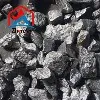
Ferrosilicon 72 and Ferrosilicon 75 are produced through the same basic carbothermic reduction process in submerged arc furnaces. The main difference is the target silicon content and the production control required to keep the finished alloy within the agreed chemistry.
FeSi75 contains more silicon per tonne of alloy than FeSi72, but this does not automatically mean that every FeSi75 batch has lower impurities or is suitable for a more demanding application. When comparing the two grades, you should look at the actual Si content, impurity limits, particle size, batch COA and cost per usable silicon unit.
Quick Answer: FeSi72 and FeSi75 use essentially the same ferrosilicon production route: silica, carbon reductants and an iron source are smelted in a submerged arc furnace. FeSi75 is produced to a higher target silicon content, while FeSi72 contains slightly less silicon.
The better choice depends on the silicon units you need, impurity specification, alloy recovery, price and application-not simply on whether the grade number is 72 or 75.
| Comparison Item | FeSi72 | FeSi75 |
|---|---|---|
| Primary Difference | Lower target Si grade | Higher target Si grade |
| Production Route | Submerged arc furnace carbothermic reduction | Submerged arc furnace carbothermic reduction |
| Silicon Input | Less Si per tonne of alloy | More Si per tonne of alloy |
| Impurity Level | Depends on the agreed specification; grade number alone does not define Al, C, P, S or other impurity limits | |
| Typical Purchasing Focus | Cost per tonne and required Si input | Higher Si concentration and cost per usable Si unit |
| Applications | Both may be used in steelmaking, foundry and other metallurgical processes when their chemistry meets the process specification | |
How Is Ferrosilicon 72 Produced?
Raw Materials & Batching
Ferrosilicon 72 is produced from silica-bearing material, carbon reductants and an iron source. Depending on the plant, reductants may include coal, semi-coke, coke, charcoal or a combination of carbon materials.
The raw-material ratio is adjusted according to the target silicon content and furnace conditions. Raw-material quality matters because elements introduced through quartz, carbon materials and iron-bearing inputs can affect the chemistry of the final alloy.
For FeSi72 production, the objective is to keep the finished alloy within the agreed Si range while controlling Al, C, P, S and other specified elements according to the order requirement.
Smelting Process
The prepared charge is continuously fed into a submerged arc furnace. Electrical energy creates the high-temperature reaction zone required for carbon to reduce silica and form silicon, which combines with iron to produce ferrosilicon.
There is no single fixed furnace temperature or operating parameter that defines FeSi72 production. Furnace power, electrode position, charge resistance, burden composition and tapping practice are adjusted according to the furnace design and operating conditions.
During production, chemical analysis is used to check whether the alloy is approaching the target Si content. The charge composition and operating conditions can then be adjusted when required.
Post-Smelting Processing
After tapping, molten ferrosilicon is cast and allowed to cool. The solid alloy is then crushed and screened into the required particle-size range.
Common commercial lump sizes include 10–50 mm and 10–100 mm, while other size ranges can be agreed according to feeding and handling requirements.
The finished batch should be checked for chemical composition and particle size before shipment. A batch COA can then be used to compare the actual test results with the agreed purchase specification.
How Is Ferrosilicon 75 Produced?
Raw Material Selection
Ferrosilicon 75 uses the same basic raw-material system as FeSi72: silica, carbon reductants and an iron source.
Because the target silicon content is higher, charge preparation and furnace operation must support sufficient silicon recovery while keeping the finished chemistry within specification.
Raw-material purity becomes especially important when your FeSi75 order also specifies tighter limits for Al, C, P, S, Ti or other elements. However, FeSi75 does not automatically mean low-Al or high-purity ferrosilicon. These impurity limits need to be stated separately in the purchase specification.
Smelting Process
FeSi75 is also smelted in a submerged arc furnace through carbothermic reduction. The plant controls the burden composition, furnace power, electrode operation and tapping conditions to reach the required silicon level and maintain stable furnace performance.
FeSi75 should not be defined by a universal furnace temperature or a fixed "longer smelting time." Actual furnace parameters vary with furnace design, raw materials, electrical conditions and plant operating practice.
Industrial FeSi75 research also shows that carbon-reductant selection, electrical conditions and furnace operating parameters can significantly affect silicon recovery, energy consumption and final Si content. This is why stable process control matters more than quoting a single temperature value.
Post-Smelting Processing
After tapping and cooling, FeSi75 is crushed and screened in much the same way as FeSi72. The required size range should be selected according to your furnace, ladle feeding system and handling conditions.
Final inspection should confirm the agreed Si content, controlled impurities and particle size. If you require tighter Al or other impurity limits, those values should appear clearly on the quotation, PO and batch COA.
For more detail on FeSi75 chemistry and available sizes, see our FeSi75 product specification.
Ferrosilicon 72 vs 75: What Changes the Cost?
FeSi75 is often quoted at a different price per tonne from FeSi72, but the grade number alone does not explain the whole cost difference.
| Cost Factor | Why It Matters |
|---|---|
| Target Si Content | FeSi75 contains more silicon per tonne of finished alloy |
| Raw Materials | Quartz and reductant quality can affect silicon recovery, impurity control and furnace efficiency |
| Electricity | Ferrosilicon smelting is energy intensive, so power consumption is an important production cost |
| Impurity Limits | Tighter Al, C, P, S or other limits can require tighter material and process control |
| Particle Size | Narrow size ranges or low-fines requirements may require additional crushing and screening |
| Inspection | Additional laboratory testing or third-party inspection can affect the final order cost |
For purchasing, do not compare FeSi72 and FeSi75 only by USD/MT. A more useful comparison is the cost per usable silicon unit, together with actual silicon recovery and the impurity requirements of your process.
Does FeSi75 Mean Better Quality Than FeSi72?
Not necessarily. FeSi75 primarily indicates a higher silicon grade. It does not by itself guarantee lower Al, C, P, S or other impurities.
A well-controlled FeSi72 batch that meets your required chemistry may be more suitable than an FeSi75 batch with impurity levels outside your process limits.
When quality is important, compare:
- actual Si content
- maximum Al and other controlled impurities
- batch-to-batch consistency
- particle-size distribution and fines
- batch COA
- sampling and inspection method
If aluminum is one of your critical limits, review our low aluminum ferrosilicon grades guide.
FeSi72 vs FeSi75 Applications
Both grades can be used in steelmaking and foundry operations. The choice depends on the silicon addition required and the agreed impurity specification.
| Application | FeSi72 | FeSi75 |
|---|---|---|
| General Steelmaking | Can be used where the required chemistry and cost structure suit FeSi72 | Commonly used where a higher Si concentration is preferred |
| Deoxidation | Provides silicon for deoxidation | Provides more silicon per tonne of alloy |
| Silicon Adjustment | Suitable where its Si grade meets the calculation | Requires less alloy mass for the same theoretical Si addition |
| Foundry | May be used according to the required chemistry and inoculation practice | May also be used where FeSi75 chemistry and particle size are required |
| Special Chemistry | Select by actual Al, C, P, S, Ti, Ca and other required limits rather than grade name alone | |
If you are still deciding which base grade to specify, see our ferrosilicon grade selection guide.
Conclusion
Ferrosilicon 72 and Ferrosilicon 75 are produced through essentially the same carbothermic reduction process in submerged arc furnaces. The most direct difference is the target silicon content, not two completely different production technologies.
FeSi75 provides more silicon per tonne of alloy, while FeSi72 may be suitable where its silicon content and total cost match your process. Neither grade should be judged by Si content alone. Confirm impurity limits, particle size, batch COA and silicon recovery before choosing between them.
About ZhenAn International
With 30 years of experience in metallurgical materials, we integrate ferroalloy production, processing and international trade. Our 30,000 m² facilities include two production bases and a testing laboratory, with annual production capacity exceeding 150,000 tons and regular ferroalloy inventory of about 5,000 tons.
For FeSi72 and FeSi75 orders, we can confirm chemical composition, impurity limits, particle size, packing and batch documentation before quotation. COA and third-party inspection through SGS, BV or Intertek can be arranged according to order requirements.
If you need FeSi75, you can first check our Ferrosilicon 75 specification and send us your target chemistry, size, quantity and destination port.
Need FeSi72 or FeSi75?
Send us your required Si content, impurity limits, particle size, quantity, packing and destination port. We can confirm the suitable grade and prepare a current quotation.
View FeSi75 Specification Request FeSi QuoteFAQ
Q: Is the production process different for FeSi72 and FeSi75?
A: The basic process is the same. Both are produced by carbothermic reduction of silica in submerged arc furnaces. The charge balance and furnace operation are controlled to reach the required final Si content and chemistry.
Q: Does FeSi75 require a higher furnace temperature than FeSi72?
A: There is no universal temperature such as 1800°C for FeSi72 and 1850°C for FeSi75. Actual furnace temperature and operating parameters depend on furnace design, burden composition and plant conditions.
Q: Is FeSi75 higher purity than FeSi72?
A: Not automatically. FeSi75 primarily specifies a higher Si grade. Al, C, P, S and other impurity limits must be confirmed separately.
Q: Why can FeSi75 cost more than FeSi72?
A: FeSi75 contains more silicon per tonne and its production must achieve the higher target Si level. Final price is also affected by raw materials, electricity, impurity limits, particle size, inspection and market conditions.
Q: Should I buy FeSi72 or FeSi75 for steelmaking?
A: Choose according to the required silicon addition, actual alloy recovery, impurity limits and cost per usable silicon unit. FeSi75 is not automatically better for every steel grade.
Q: What should I compare on FeSi72 and FeSi75 COAs?
A: Compare the actual Si value, Al and other agreed impurity limits, batch identification and any required particle-size or inspection results against your purchase specification.