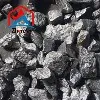
Two Silicon Grades, Two Very Different Jobs
Silicon metal 2202 and ferrosilicon 72 are both silicon-bearing metallurgical products sold into steelmaking, casting and downstream manufacturing, yet they are not interchangeable. One is a refined, high-purity element used where silicon itself is the product; the other is a master alloy whose job is to deliver silicon and iron together into molten steel or iron. Comparing them therefore means comparing composition, production route, particle size and application rather than a single headline percentage.
The practical question behind the comparison is usually economic. Ferrosilicon is the lower-cost way to add silicon to a melt, while silicon metal is specified only where the residual iron, aluminium and calcium that ferrosilicon brings with it would be harmful to the finished material.
Composition and Grade Naming
Silicon metal is designated by a four-digit code in which each pair of digits states the maximum iron, aluminium and calcium content in hundredths of one percent. Grade 2202 therefore means iron up to 0.20%, aluminium up to 0.20% and calcium up to 0.02%, with silicon making up the balance at 99.5% or more. Chinese silicon metal is normally supplied against GB/T 2881, which lists the chemical requirements for the commercial grades and their size fractions.
Ferrosilicon is designated by its silicon content as a whole number. Grade 72 contains approximately 72% silicon with the balance substantially iron, plus controlled aluminium, calcium, sulphur and phosphorus. Chinese ferrosilicon is normally supplied against GB/T 2272, which defines the grade designations together with their impurity limits. A single silicon figure is therefore not enough to compare the two products: below that line, the impurity limits decide which downstream process will accept the material.
Production Routes
Silicon metal 2202 is produced by reducing quartz with a carbon reductant in an electric arc furnace, then refining the molten silicon so that iron, aluminium and calcium fall within the 2202 maxima. The refined metal is cast into ingots, crushed and screened to the required size range.
Ferrosilicon 72 is produced by high-temperature reduction of silica with coke and an iron source in a submerged arc furnace, typically operating in the 1500–2000 °C range, so that silicon and iron alloy inside the furnace. The alloy is tapped, cooled, crushed and sized. The difference in route explains most of the price gap: silicon metal carries the cost of additional refining to reach 99.5% silicon, whereas ferrosilicon deliberately keeps its iron content.
Specification Comparison
| Parameter | Silicon Metal 2202 | Ferrosilicon 72 |
|---|---|---|
| Silicon content | 99.5% minimum | Approximately 72% |
| Iron content | 0.20% maximum | Balance, approximately 28% |
| Aluminium content | 0.20% maximum | 1.5% maximum |
| Calcium content | 0.02% maximum | 1.0% maximum |
| Typical granule size | 10–100 mm, other sizes to order | 0–10 mm and 10–60 mm, other sizes to order |
| Primary role | High-purity silicon applications | Deoxidation and alloying of steel and iron |
The two products are specified on different bases, which is why a like-for-like comparison has to keep the impurity rows in view. For a steelmaking melt, the iron in ferrosilicon is compatible with the charge; for an aluminium alloy or a photovoltaic feedstock, that same iron is a contaminant that has to be paid for twice, once at purchase and again at removal.
Applications and Selection Guidance
Silicon metal 2202 is used where high purity and low aluminium, calcium and iron are essential:
Aluminium alloys: alloying addition for automotive components such as engine blocks and wheel rims, where tightly controlled impurities protect castability and mechanical properties.
Photovoltaic and solar materials: a base material for the silicon used in solar cells.
Electronics: feedstock for semiconductors, silicon chips and optical fibre.
Chemical industry: raw material for silicone rubber, silicone resin and silicone oil.
Ferrosilicon 72 performs a different set of functions in iron and steel metallurgy:
Steelmaking: acts as a deoxidiser, removing oxygen from the molten bath and reducing oxide-related defects.
Casting: serves as an inoculant and as a spheroidising agent in iron castings, controlling graphite shape and distribution.
Ferroalloy production: functions as a reducing agent in the manufacture of low-carbon ferroalloys.
Steel enhancement: raises strength, hardness and oxidation resistance in carbon and stainless steels.
Selection follows directly from those roles. Choose ferrosilicon 72 when silicon is an input to steel or iron chemistry and cost per unit of silicon governs the decision. Choose silicon metal 2202 when the melt or the end product cannot tolerate the aluminium, calcium and iron that accompany ferrosilicon, as in aluminium alloying, solar-grade feedstock and electronic materials.
Because both products are sold by chemical composition and by particle size, shipment verification normally combines a chemical analysis of each heat with a size screening check, and packaging is designed to keep the material dry: waterproof woven bags of 10 kg or 25 kg inside 1 MT bulk bags, with other configurations produced against agreed requirements.
FAQ
Q: Can ferrosilicon 72 be used instead of silicon metal 2202?
Generally no. Ferrosilicon brings roughly 28% iron plus higher aluminium and calcium, so it cannot meet the impurity limits that define grade 2202 or the purity requirements of solar, electronic and aluminium alloy applications.
Q: What do the digits in silicon metal grade 2202 mean?
They are maximum impurity contents in hundredths of a percent, in the order iron, aluminium and calcium: iron 0.20%, aluminium 0.20% and calcium 0.02%, with silicon 99.5% minimum.
Q: Which grade is used for deoxidising steel?
Ferrosilicon, typically grade 72 or 75, is the standard deoxidation addition. Silicon metal is used instead only when the residual iron and aluminium it replaces would be acceptable to the melt.
Q: Why does ferrosilicon contain so much iron?
The iron is not an impurity to be minimised; it lowers the melting point of the alloy relative to pure silicon and is fully compatible with a steel or iron melt, so the alloy dissolves readily and delivers silicon efficiently.
Q: Are the size fractions of the two products interchangeable?
No. Silicon metal is normally supplied in coarse 10–100 mm lumps for melting or crushing, whereas ferrosilicon is commonly supplied finer, often 0–10 mm, so that it disperses quickly in the bath or in a casting inoculant stream.
Q: How is the quality of a shipment verified?
By chemical analysis of each heat for silicon, iron, aluminium, calcium, sulphur and phosphorus as applicable, supported by size screening and by packaging that keeps the material dry in transit and storage.