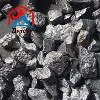
What Silicon Manganese Nitride Is
Silicon manganese nitride is a nitrided ferroalloy used as a nitrogen carrier and alloying additive in steelmaking. It combines silicon and manganese with a substantial nitrogen content held in nitride phases, so one addition supplies three functions at once: deoxidation, manganese alloying and nitrogen alloying. Compared with conventional nitride alloys it offers good thermal resistance, useful thermal conductivity, chemical stability and low thermal expansion, which is why its micro-alloying and nitriding effects are used in a growing range of steel grades.
Why Nitrogen Is Added to Steel
Nitrogen is a low-cost austenite stabiliser and a strong interstitial strengthener. In the correct range it raises yield strength, improves resistance to strain ageing and refines the structure. In silicon steel it supports the crystallographic texture required for good magnetic performance; in micro-alloyed and high-strength bar steels it contributes to precipitation strengthening together with vanadium, niobium and titanium.
How Nitrogen Is Taken Up by the Melt
The nitrogen held in the nitride phases is released into the melt as those phases dissolve. Because the carrier also supplies silicon and manganese, the addition is recovered as an alloying package rather than as a gas injection, which keeps the treatment simple and predictable in the ladle and avoids the losses of a gaseous route.
Laboratory and industrial experimental research shows that when silicon manganese nitride is added in the later stage of ladle furnace refining, the nitrogen yield is relatively stable and averages 55.7 percent. That stability is the practical advantage of a solid nitrided carrier: the nitrogen pick-up can be planned in the charge calculation instead of being corrected later.
Effect on Inclusions and Mechanical Properties
Adding nitrogen to steel with silicon manganese nitride does not affect the inclusion content of the steel. Plant results confirm that metallographic inspection ratings and the low-temperature impact properties of the finished steel still meet the standard requirements of the corresponding steel types, so the nitrogen addition can be introduced without re-opening the accepted quality envelope of the grade.
Where Silicon Manganese Nitride Is Used
Silicon steel, where nitrogen supports the texture and magnetic quality demanded by electrical applications.
Hot-rolled ribbed bar steel of the HRB400 class and above, where it adds strength without a large increase in alloy cost.
Micro-alloyed structural steels that require a controlled nitrogen range for precipitation strengthening.
Heats that are also short of manganese and silicon, where a combined nitride addition saves handling steps and time.
Titanium and niobium micro-alloyed grades, in particular, benefit because nitrogen adjusts the solubility of the carbonitride particles that carry the strength contribution.
Addition Practice and Quality Control
| Step | Practice |
|---|---|
| Charge calculation | Set the nitrogen target and the expected yield before tapping |
| Timing | Add in the later stage of ladle furnace refining, where the yield is most stable |
| Sampling | Take a ladle sample for nitrogen and check silicon and manganese on the same sample |
| Verification | Check metallographic cleanliness and low-temperature impact toughness on the finished steel |
| Traceability | Record heat number, addition weight and analysed nitrogen for every cast |
Particle size influences dissolution: the additive is supplied in sized lumps so that it does not float on the slag or dissolve too slowly in the ladle. Storage in a dry, covered area prevents moisture pick-up, which would otherwise introduce hydrogen and disturb the nitrogen recovery of the following heat.
FAQ
Q: What nitrogen yield can be expected in ladle furnace practice?
When the additive is introduced in the later stage of refining, industrial trials give a stable yield averaging 55.7 percent, with little scatter between heats.
Q: Does silicon manganese nitride raise the inclusion content of the steel?
No. Metallographic results show no increase in inclusions, and the low-temperature impact properties of the finished steel continue to meet the requirements of the steel grade.
Q: Which steel types benefit most?
Silicon steel and micro-alloyed bar steel such as the HRB400 class and above, where a controlled nitrogen range raises strength and supports the required structure.
Q: How does it compare with conventional nitride alloys?
It supplies nitrogen together with silicon and manganese, has good thermal resistance and chemical stability, and dissolves predictably in the ladle, which makes the charge calculation reliable.
Q: Why is the additive introduced late in refining?
Late addition limits nitrogen loss to the slag and the atmosphere and keeps the recovery stable, which is the basis of the 55.7 percent average yield.
Q: How should the material be stored?
In a dry, covered store in the supplied sized form, to avoid moisture pick-up that would affect both recovery and the hydrogen content of the steel.