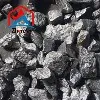
High carbon ferrosilicon is a silicon- and carbon-bearing ferroalloy used in selected steelmaking processes, particularly converter steelmaking. Unlike conventional ferrosilicon, which is primarily added to supply silicon for deoxidation and alloying, high carbon ferrosilicon can provide both silicon and carbon in a single addition. This makes it relevant to processes that require simultaneous silicon adjustment, carbon addition and thermal input.
In converter steelmaking, it may be evaluated as a combined addition or as a partial substitute for separate ferrosilicon, silicon carbide and carburizing materials. However, its suitability depends on the chemical composition of the alloy, the target steel grade, carbon and silicon recovery rates, and the converter's operating conditions.
High Carbon Ferrosilicon: Key Facts
- Main components: Silicon, carbon and iron.
- Primary functions: Silicon addition, deoxidation and carbon adjustment.
- Main application: Selected converter steelmaking operations.
- Potential advantage: Combines silicon and carbon additions in one alloy.
- Key purchasing criteria: Si content, C content, impurity limits, particle size and batch consistency.
Contents
- What Is High Carbon Ferrosilicon?
- How Does High Carbon Ferrosilicon Work in Steelmaking?
- Main Applications of High Carbon Ferrosilicon
- High Carbon Ferrosilicon vs. Conventional Ferrosilicon and Silicon Carbide
- Advantages and Limitations
- How to Select High Carbon Ferrosilicon
- Chemical Composition and Quality Inspection
- Frequently Asked Questions
1. What Is High Carbon Ferrosilicon?
High carbon ferrosilicon is a ferroalloy containing silicon, carbon and iron, formulated for applications in which both silicon and carbon are required. Its defining characteristic is the combination of these two elements rather than silicon content alone.
Conventional ferrosilicon is generally selected according to its silicon grade, such as Ferrosilicon 75, 72, 65 or 45. High carbon ferrosilicon, by contrast, must also be evaluated according to its carbon content and the relationship between its silicon and carbon concentrations.
The term high carbon ferrosilicon does not establish one universal chemical composition. Buyers should confirm the actual Si and C values, together with the impurity limits, from the supplier's technical specification and batch-specific Certificate of Analysis (COA).
The Main Components and Their Functions
| Element | Role in Steelmaking | What Buyers Should Check |
|---|---|---|
| Silicon (Si) | Acts as a deoxidizing element and contributes to the final silicon content of steel. | Minimum or specified Si content and recovery requirements. |
| Carbon (C) | Provides carbon for adjusting the carbon level of molten steel and can contribute thermal energy when oxidized. | Carbon content, recovery rate and compatibility with the target steel grade. |
| Iron (Fe) | Forms the metallic base of the ferroalloy. | Overall chemical balance and consistency. |
| Aluminium (Al) | Can influence deoxidation behaviour and the composition of non-metallic inclusions. | Maximum allowable content according to the steelmaking specification. |
| Phosphorus (P) and Sulphur (S) | Unwanted impurities that may affect the quality of the finished steel. | Maximum limits required by the intended steel grade. |
For this reason, purchasing high carbon ferrosilicon solely according to its nominal silicon content is insufficient. The carbon-to-silicon ratio is equally important when the material is intended to replace multiple additions.
2. How Does High Carbon Ferrosilicon Work in Steelmaking?
The metallurgical value of high carbon ferrosilicon comes from the different reactions of silicon and carbon in molten steel. Both elements can participate in oxygen-related reactions, but their functions and recovery behaviours are different.
2.1 Silicon Deoxidation
Silicon has a strong affinity for oxygen. When silicon dissolves in molten steel, it reacts with dissolved oxygen to form silicon dioxide (SiO₂).
[Si] + 2[O] → SiO₂
The resulting silica can enter the slag or participate in the formation of non-metallic inclusions. The actual deoxidation result depends on oxygen activity, temperature, slag chemistry and the sequence of alloy additions.
When high carbon ferrosilicon is introduced, its silicon fraction contributes to the silicon available for deoxidation. The actual recovery must be determined from the steelmaking process rather than assumed to be 100%.
2.2 Carbon Adjustment
The carbon fraction provides an additional source of carbon for molten steel. Carbon can also react with oxygen to form carbon monoxide:
[C] + [O] → CO(g)
In converter steelmaking, carbon oxidation contributes to the generation of reaction heat. However, the amount of carbon retained in the finished steel depends on the oxygen potential, temperature, slag condition, addition timing and process stage.
Therefore, high carbon ferrosilicon should be selected only when the process can accommodate its carbon contribution. It is not automatically suitable for steel grades with strict low-carbon requirements.
2.3 Combined Silicon and Carbon Addition
The main process consideration is that silicon and carbon are supplied together in a predetermined chemical ratio.
When both elements are needed, one addition may reduce the number of separate alloying materials required. However, the ratio of silicon to carbon in the alloy must match the steelmaker's target as closely as practical.
If the target carbon and silicon increases do not correspond to the alloy's composition and expected recovery rates, separate ferrosilicon and carburizer additions may provide better control.
3. Main Applications of High Carbon Ferrosilicon
3.1 Converter Steelmaking
Converter steelmaking is one of the principal applications associated with high carbon ferrosilicon.
In selected converter operations, the material can be used as a combined silicon- and carbon-bearing addition. Depending on the production practice, it may replace part of the conventional ferrosilicon, silicon carbide or carburizer additions.
The practical objective is to coordinate silicon adjustment, carbon input and the thermal balance of the converter process.
Before introducing it into an existing production route, steelmakers should evaluate:
- Initial carbon and silicon concentrations in the molten steel.
- Target chemical composition of the finished steel.
- Expected silicon and carbon recovery rates.
- Converter temperature and thermal balance.
- Slag composition and oxygen conditions.
- Timing, addition location and dissolution behaviour.
3.2 Carbon and Silicon Adjustment in Steel Production
Some steel grades require both silicon and carbon to fall within specified chemical ranges. In these cases, a combined alloy can be evaluated as an alternative to purchasing and charging separate materials.
The benefit is not simply fewer additions. The more important question is whether the combined alloy can achieve the required chemical composition without excessive silicon or carbon pickup.
For steel grades with narrow carbon limits, separate additions may remain preferable because they allow the operator to control each element independently.
3.3 As a Potential Heating Agent in Converter Operations
The oxidation of silicon and carbon releases heat. Consequently, silicon- and carbon-bearing materials may contribute to the thermal balance of a steelmaking process when their oxidation is incorporated into the operating practice.
High carbon ferrosilicon can therefore be evaluated as a combined alloying and thermal-input material in suitable converter applications.
Its actual heating contribution depends on the amount and oxidation behaviour of the material. Operators should calculate the thermal contribution using the material's chemical composition and the furnace's heat balance rather than relying on a general heating-efficiency claim.
4. High Carbon Ferrosilicon vs. Conventional Ferrosilicon and Silicon Carbide
High carbon ferrosilicon, conventional ferrosilicon and silicon carbide can all contribute silicon to steelmaking, but they do not supply the same combination of elements.
| Comparison Item | High Carbon Ferrosilicon | Conventional Ferrosilicon | Silicon Carbide (SiC) |
|---|---|---|---|
| Main Components | Silicon, carbon and iron. | Silicon and iron, with carbon depending on grade. | Silicon and carbon chemically combined. |
| Silicon Supply | Yes, according to its specified Si content. | Yes, according to its grade. | Yes, according to its SiC content. |
| Carbon Supply | Yes, according to its specified carbon content. | Depends on the actual carbon specification. | Yes, according to its SiC content. |
| Primary Selection Objective | Combined silicon and carbon adjustment. | Silicon deoxidation and alloying. | Combined silicon and carbon contribution in suitable processes. |
| Key Purchasing Consideration | Si/C ratio and impurity limits. | Si content and impurity limits. | SiC content, free carbon and impurities. |
| Process Flexibility | Both element additions are linked to the material's composition. | Carbon can be adjusted separately. | Si and C contributions are linked to SiC chemistry. |
Important purchasing distinction: High carbon ferrosilicon is not a direct one-to-one replacement for conventional ferrosilicon or silicon carbide. The replacement ratio must be calculated from the actual chemical composition and recovery rates of the materials being compared.
5. Advantages and Limitations of High Carbon Ferrosilicon
Potential Advantages
- Combined alloy addition: Supplies silicon and carbon through one material when both elements are required.
- Fewer separate additions: May simplify material handling and charging procedures in suitable processes.
- Thermal contribution: Silicon and carbon oxidation can contribute heat to converter operations.
- Material substitution potential: May partially replace separate silicon- and carbon-bearing materials after process evaluation.
- Cost optimization: Can be economically attractive when its combined chemical contribution matches the production target.
Limitations and Process Considerations
- Linked Si and C recovery: The two elements cannot be independently adjusted through a single fixed-composition material.
- Carbon pickup: Excessive carbon recovery may cause the finished steel to exceed its specified carbon limit.
- Silicon loss: Part of the silicon may oxidize and enter the slag rather than remain in the steel.
- Impurity control: Aluminium, phosphorus, sulphur and other elements must satisfy the steel grade requirements.
- Thermal balance: The addition must be compatible with the converter's temperature and oxidation conditions.
6. How to Select High Carbon Ferrosilicon
For industrial buyers, product selection should begin with the target steel composition rather than the nominal alloy grade.
6.1 Calculate the Required Silicon and Carbon Inputs
The required addition depends on the initial steel composition, target composition, alloy chemistry and actual element recovery.
The theoretical addition requirement for an individual element can be estimated using:
Required Alloy Addition (kg) =
Steel Mass × Required Element Increase
────────────────────────────────────
Alloy Element Content × Element Recovery
For this calculation, all concentrations must be expressed as mass fractions. Silicon and carbon should be calculated separately using their respective recovery rates.
For example, if the silicon requirement indicates one addition quantity but the carbon requirement indicates a different quantity, the operator must determine whether the combined alloy can satisfy both targets simultaneously.
If the two calculated requirements are incompatible, using high carbon ferrosilicon alone may not be appropriate. A combination of conventional ferrosilicon and a separate carburizer may offer better control.
6.2 Confirm the Chemical Specification
Before ordering, buyers should confirm the following information:
| Specification | Required Confirmation |
|---|---|
| Silicon (Si) | Minimum content or agreed chemical range. |
| Carbon (C) | Minimum content or agreed chemical range. |
| Aluminium (Al) | Maximum allowable content. |
| Phosphorus (P) | Maximum allowable content. |
| Sulphur (S) | Maximum allowable content. |
| Other Elements | Calcium, manganese, chromium and other elements where required. |
| Physical Form | Lumps, granules or another agreed form. |
| Particle Size | Specified size range, oversize and undersize tolerances. |
6.3 Match Particle Size to the Charging Method
Particle size influences dissolution, feeding, dust generation and material recovery.
- Lumps: Should be evaluated for mechanical handling, charging conditions and dissolution time.
- Granules: Can be considered where controlled feeding and more uniform particle distribution are required.
- Powder: Requires particular attention to dust losses, handling equipment and feeding behaviour.
Do not select a size based solely on the material's nominal grade. Confirm the actual size distribution and allowable fines content with the supplier.
7. Chemical Composition and Quality Inspection
Because high carbon ferrosilicon supplies two key alloying elements, batch consistency is particularly important. A change in the Si/C ratio can alter the quantity of material required and affect the final steel composition.
A suitable incoming inspection procedure should cover the following:
Chemical Analysis
Check the actual silicon and carbon contents against the purchase specification. Other relevant elements, particularly Al, P and S, should also be checked.
Different analytical methods may be needed for different elements. For example, combustion analysis is commonly used for carbon and sulphur, while optical emission spectroscopy or other validated methods may be used for metallic elements.
Physical Inspection
Inspect the material for excessive fines, foreign substances, visible contamination and inconsistent particle sizes. Moisture should also be checked according to the agreed specification and applicable handling requirements.
Batch Documentation
Each shipment should be supported by appropriate quality documentation, including:
- Batch-specific Certificate of Analysis (COA).
- Actual Si and C test results.
- Relevant impurity test results.
- Particle size inspection records.
- Product identification and batch traceability.
Buyers should also confirm the applicable product specification and inspection method before production or shipment. A generic chemical composition table should not replace the actual COA for the delivered lot.
8. High Carbon Ferrosilicon vs. Standard Ferrosilicon: Which Should You Choose?
The selection depends on whether the steelmaking process needs silicon alone or a combined silicon and carbon contribution.
| Production Requirement | Material to Evaluate | Reason |
|---|---|---|
| Silicon deoxidation with strict carbon control. | Conventional ferrosilicon. | Allows silicon addition without deliberately introducing a high carbon contribution. |
| Simultaneous silicon and carbon adjustment. | High carbon ferrosilicon. | Provides both elements in one material, subject to the required recovery ratio. |
| Carbon adjustment without additional silicon. | Carburizer. | Allows carbon to be adjusted independently. |
| Combined Si and C contribution using silicon carbide. | Silicon carbide. | Provides silicon and carbon through a different chemical form and reaction behaviour. |
| Precise independent control of Si and C. | Separate ferrosilicon and carburizer additions. | Allows the two elements to be adjusted independently. |
For information about conventional ferrosilicon grades, production and available product forms, see our Ferrosilicon Products and Production page.
9. Frequently Asked Questions About High Carbon Ferrosilicon
1. What is high carbon ferrosilicon used for?
High carbon ferrosilicon is used in selected steelmaking processes to provide both silicon and carbon. Its applications include converter steelmaking, combined alloy additions and process routes where carbon and silicon adjustment are both required.
2. What is the difference between high carbon ferrosilicon and ordinary ferrosilicon?
The main difference is the carbon specification and intended application. Conventional ferrosilicon is primarily selected as a silicon source, whereas high carbon ferrosilicon is designed to provide both silicon and carbon. Buyers should compare actual chemical analyses rather than product names alone.
3. Can high carbon ferrosilicon replace silicon carbide?
It may replace part of a silicon carbide addition in selected processes, but the two materials are not automatically interchangeable. Their silicon and carbon contents, reaction behaviour, recovery rates and impurity profiles must be compared before substitution.
4. Can high carbon ferrosilicon be used as a deoxidizer?
Yes. Its silicon component can react with dissolved oxygen in molten steel to form silicon dioxide. The carbon component can also participate in oxygen-related reactions, although the final carbon recovery depends on the steelmaking conditions.
5. Is high carbon ferrosilicon suitable for low-carbon steel?
Not automatically. If a steel grade has a strict maximum carbon limit, the additional carbon may create a risk of exceeding the specification. The carbon recovery and target composition must be calculated before using this material.
6. What chemical composition should buyers check?
The primary checks are silicon and carbon content, followed by aluminium, phosphorus, sulphur and other application-specific impurities. Particle size and moisture requirements should also be agreed before ordering.
7. Does high carbon ferrosilicon generate hydrogen during deoxidation?
The principal silicon-oxygen and carbon-oxygen reactions involved in deoxidation form silicon dioxide and carbon monoxide rather than hydrogen. However, this does not constitute a general safety guarantee. Material moisture, impurities, storage conditions and the applicable safety data sheet must still be considered.
8. What documents should accompany a shipment?
Buyers should request a batch-specific COA showing silicon, carbon and relevant impurity results, together with product identification and particle size inspection information. Other shipping documents should be agreed according to the purchase contract.
Looking for Ferrosilicon for Steelmaking?
Contact ZhenAn to discuss ferrosilicon grades, chemical specifications, particle sizes and packaging requirements for your production process.
Get Ferrosilicon QuoteZHEN AN INTERNATIONAL CO., LIMITED | Ferrosilicon and Ferroalloy Products