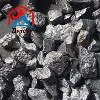
The so-called washed iron refers to that in the ferroalloy industry, after the ore is smelted at high temperature in a smelting blast furnace or submerged arc furnace, the molten iron and waste slag are separated and flow out from different outlets. The discharged waste slag is rapidly cooled by cold water to form granules, and the components in the waste slag are removed. In addition to unwanted impurities, there is also a low content of ferrous alloys.

First, bromobenzene is produced in the laboratory using benzene and bromine in high-carbon ferrochromium washed iron or iron filings as a catalyst.
Next, hydrogen bromide dissolves into the water in the Erlenmeyer flask to generate hydrobromic acid. Therefore, after the reaction is completed, drop the silver nitrate solution into the Erlenmeyer flask, and a light yellow silver bromide will precipitate: HBr+AgNO3=AgBr↓+HNO3.

Then, pour the product in the flask into a beaker filled with distilled water. There is a brownish-brown water-insoluble liquid at the bottom of the beaker. This is bromobenzene. It is a colorless liquid heavier than water. It is due to the dissolved bromine. Often appears brown. To remove bromine from bromobenzene, wash it with alkali solution (usually 10% NaOH) and then separate it with a separatory funnel.

Note: Pay attention to control the reaction speed. It is appropriate for the liquid surface of the reactants to boil slightly. It should not be too violent. Otherwise, a large amount of benzene and bromine will evaporate and cause the experiment to fail. A long tube perpendicular to the mouth of the bottle can not only conduct air, but also serve as a guide. The function of the condenser causes the evaporated benzene or bromine to reflux back.