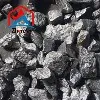
Ferrosilicon, ferrosilicon powder and silica fume are three different materials associated with silicon production and metallurgical processing. Although they share similar names, their chemical compositions, manufacturing processes, physical properties and industrial applications are fundamentally different. Ferrosilicon is an iron-silicon alloy used mainly for steelmaking deoxidation and alloying. Ferrosilicon powder is the finely processed form of this alloy, used in dense-medium separation, welding consumables and selected metallurgical processes. Silica fume, by contrast, is an ultrafine amorphous silicon dioxide (SiO₂) by-product collected during silicon metal and ferrosilicon production. Understanding these differences is essential when selecting materials for steelmaking, mineral processing, concrete production and refractory manufacturing.
Quick Answer: What Is the Difference?
Ferrosilicon is a metallic alloy containing iron and silicon. Ferrosilicon powder is the same alloy processed into a controlled fine particle size. Silica fume is a non-metallic, ultrafine SiO₂ powder collected from furnace exhaust gases. Ferrosilicon is primarily used in steelmaking, while ferrosilicon powder serves applications such as dense-medium separation and welding, and silica fume is mainly used in concrete and refractory formulations.
Contents
1. What Is Ferrosilicon?
Ferrosilicon (FeSi) is an iron-silicon master alloy produced by smelting silica-rich quartz and carbonaceous reducing materials in submerged arc furnaces, with iron-bearing materials included in the charge. Its commercial grades are classified mainly according to silicon content.
Common grades include Ferrosilicon 75, Ferrosilicon 72, Ferrosilicon 65 and Ferrosilicon 45. The appropriate grade depends on the required silicon addition, alloy recovery, steel chemistry and production process.
Main Functions of Ferrosilicon
- Steelmaking deoxidation: Silicon reacts with dissolved oxygen in molten steel to form silicon dioxide, which can enter the slag during refining and contribute to oxygen removal.
- Alloying: Ferrosilicon supplies silicon to carbon steel, low-alloy steel, electrical steel and other silicon-bearing steel grades.
- Foundry treatment: Selected ferrosilicon-based inoculants promote graphite nucleation in grey and ductile iron, helping control carbide formation and casting microstructure.
- Metallurgical reduction: High-silicon ferrosilicon serves as a reducing agent in processes such as the Pidgeon process for magnesium production.
Common Ferrosilicon Grades
| Grade | Nominal Silicon Content | Typical Applications |
|---|---|---|
| Ferrosilicon 75 | 75% | Steelmaking deoxidation, alloying and magnesium reduction |
| Ferrosilicon 72 | 72% | General steelmaking and alloying |
| Ferrosilicon 65 | 65% | Steelmaking, foundry and selected metallurgical applications |
| Ferrosilicon 45 | 45% | Selected steelmaking and foundry processes |
Note: Grade names indicate nominal silicon content. Actual minimum content, permitted composition ranges and impurity limits depend on the applicable standard and purchase specification. Buyers should confirm the batch-specific COA.
Ferrosilicon is supplied in different physical forms, including natural lumps, crushed granules, powder and briquettes. The choice depends on furnace feeding equipment, dissolution requirements and the intended metallurgical process.
Explore ZhenAn Ferrosilicon Products and Specifications
2. What Is Ferrosilicon Powder?
Ferrosilicon powder is produced by crushing, grinding and classifying ferrosilicon alloy into fine particles. Unlike silica fume, it retains the metallic Fe-Si composition of its parent alloy. Its silicon grade is determined by the original alloy, while its particle size distribution is controlled during mechanical processing.
For example, Ferrosilicon 75 powder has the chemical composition of the selected Ferrosilicon 75 alloy, subject to processing and batch specifications. Grinding changes the physical form, not the fundamental identity of the material.
Main Applications of Ferrosilicon Powder
Dense-Medium Separation
Ferrosilicon powder is used as a dense-medium material in coal preparation and mineral processing. When mixed with water, it forms a suspension with an adjustable density. Separation equipment uses this medium to distinguish particles according to their relative density.
For dense-medium applications, buyers should pay particular attention to particle size distribution, magnetic recovery characteristics and medium stability. Excessively coarse particles may settle too quickly, while an unsuitable fine fraction can increase medium viscosity and complicate recovery.
Welding Electrode and Flux Formulations
Selected ferrosilicon powders are incorporated into welding electrode coatings and certain flux formulations. Silicon acts as a deoxidizing element, helping control oxygen in the weld metal during the welding process.
The required particle size, chemical composition and moisture level depend on the electrode or flux formulation. A powder suitable for dense-medium separation should not automatically be regarded as suitable for welding consumables.
Metallurgical Additions
Fine ferrosilicon fractions can also be used in selected metallurgical processes where controlled feeding or rapid dissolution is required. The suitability of the powder depends on the addition equipment, recovery target, dust generation and the chemical requirements of the final product.
Typical Ferrosilicon Powder Size Options
| Particle Size | Potential Application | Purchasing Consideration |
|---|---|---|
| 0–1 mm | Fine metallurgical additions | Fine fraction and oxidation loss |
| 0–3 mm | Selected metallurgical and industrial processes | Particle distribution and oversize content |
| 45–325 mesh | Fine powder applications | Mesh distribution and application-specific requirements |
| Customized size | Process-specific requirements | Sieve analysis and agreed tolerance |
These are example size options, not universal specifications. The actual size distribution should be agreed according to the intended application.
3. What Is Silica Fume?
Silica fume, also known as microsilica, is an ultrafine amorphous silicon dioxide material collected from the exhaust gases of silicon metal and ferrosilicon furnaces. It is a by-product of high-temperature smelting rather than a mechanically ground form of ferrosilicon.
During silicon and ferrosilicon production, silicon-containing gases and vapours are generated in the furnace. As these gases move through the exhaust system, they oxidize and form extremely fine SiO₂ particles. Dust collection equipment captures these particles as silica fume.
Important Chemical Difference
Ferrosilicon contains metallic silicon combined with iron. Silica fume consists predominantly of silicon dioxide (SiO₂). The silicon in silica fume is chemically bonded to oxygen and cannot be treated as equivalent to the metallic silicon content in ferrosilicon.
Main Applications of Silica Fume
High-Performance Concrete
Silica fume is used as a supplementary cementitious material in high-performance concrete. Its ultrafine particles fill spaces between cement grains, improving particle packing. Its pozzolanic reaction with calcium hydroxide produces additional calcium silicate hydrate (C-S-H), which contributes to a denser cementitious structure.
In properly designed concrete mixtures, silica fume can reduce permeability and improve compressive strength and resistance to certain aggressive environments. Its dosage and compatibility with other admixtures must be evaluated during mix design.
Refractory Materials
In refractory formulations, silica fume acts as an ultrafine silica source and packing component. It can improve the particle packing and rheological properties of castable mixtures, helping reduce water demand and improve the density of the hardened structure when the formulation is properly designed.
Other Industrial Applications
Depending on its chemical purity and physical characteristics, silica fume may also be used in selected cement-based products, grouts and other specialty construction materials.
4. Ferrosilicon vs Ferrosilicon Powder vs Silica Fume
The main distinction is not simply particle size. Ferrosilicon and ferrosilicon powder share the same basic alloy chemistry, whereas silica fume is a chemically different silicon-based material. Their differences can be summarized as follows.
| Comparison | Ferrosilicon | Ferrosilicon Powder | Silica Fume |
|---|---|---|---|
| Chemical composition | Iron-silicon alloy | Iron-silicon alloy | Predominantly SiO₂ |
| Production method | High-temperature smelting | Crushing, grinding and classification | Collection of furnace exhaust fume |
| Physical form | Lumps, granules and other sizes | Fine metallic alloy particles | Ultrafine amorphous powder |
| Main function | Deoxidation and alloying | Dense-medium material and process-specific additions | Pozzolanic reaction and micro-filling |
| Steelmaking | Direct alloy addition | Selected powder addition processes | Not a substitute for metallic ferrosilicon |
| Mineral processing | Limited compared with processed powder | Dense-medium separation | Not a conventional dense-medium substitute |
| Concrete and refractories | Not a direct substitute | Not a direct substitute | Mineral admixture and fine silica component |
| Key purchasing criteria | Si content, impurities and size | Chemistry, particle size and magnetic properties where relevant | SiO₂ content, LOI, moisture and physical properties |
Why These Materials Cannot Be Interchanged
Although all three materials contain silicon, their functions depend on their chemical state and physical properties.
- Replacing ferrosilicon with silica fume in steelmaking does not provide the same metallic silicon addition because SiO₂ is already an oxidized compound.
- Using silica fume instead of ferrosilicon powder in dense-medium separation does not provide the same metallic alloy density and magnetic recovery characteristics.
- Using ferrosilicon powder instead of silica fume in concrete does not provide the same pozzolanic reaction or ultrafine silica characteristics.
5. Industrial Applications: Which Material Should You Use?
Material selection should start with the actual process requirement rather than the word silicon on the product label.
Steelmaking and Alloy Production
Choose ferrosilicon when the process requires metallic silicon for deoxidation or alloying. The grade should be selected according to the target silicon content, steel chemistry and expected recovery.
Coal Washing and Mineral Processing
Choose ferrosilicon powder when the separation circuit requires a magnetically recoverable dense-medium material. Particle size distribution, medium density, viscosity and magnetic recovery should be considered together.
Concrete and Construction Materials
Choose silica fume when the objective is to improve concrete particle packing, reduce permeability and develop a denser cementitious structure through its filler and pozzolanic effects.
Refractory Manufacturing
Silica fume may be selected as a fine silica component in refractory castables. The required quality depends on the binder system, aggregate grading, installation method and service temperature.
6. How Are These Materials Produced?
Ferrosilicon Production
Ferrosilicon is produced through carbothermic reduction in submerged arc furnaces. Quartz or other suitable silica sources provide silicon dioxide, while carbonaceous materials such as coke and coal provide the reducing carbon. Iron-bearing materials contribute iron to the final alloy.
The simplified overall reduction reaction is:
SiO₂ + 2C → Si + 2CO
The actual furnace process involves intermediate reactions and the formation of silicon-bearing compounds. After tapping and solidification, the alloy is crushed, screened and separated into the required product sizes.
Ferrosilicon Powder Production
Ferrosilicon powder is manufactured from solidified ferrosilicon through mechanical processing. The general production sequence includes:
- Selection and inspection of the parent ferrosilicon alloy.
- Primary crushing to reduce large alloy pieces.
- Fine grinding to obtain the required particle size.
- Screening and classification to control the particle size distribution.
- Packaging and inspection of the finished powder.
The grinding and screening stages are particularly important because the particle size distribution affects feeding behaviour, dust generation and performance in the intended application.
Silica Fume Collection
Silica fume is collected from furnace exhaust gases through industrial dust collection systems. The captured material is then handled and processed according to the required commercial form, such as densified or undensified silica fume.
Unlike ferrosilicon powder production, silica fume does not require grinding metallic alloy into smaller particles. Its ultrafine particle structure originates from the high-temperature gas-phase reactions during silicon and ferrosilicon smelting.
7. How to Select the Right Material
For industrial buyers, the correct purchasing specification should reflect the material's intended function. Comparing only the price per tonne or the nominal silicon percentage can lead to an unsuitable purchase.
Ferrosilicon Purchasing Checklist
| Specification | What Buyers Should Confirm |
|---|---|
| Grade | Ferrosilicon 75, 72, 65, 45 or another agreed grade |
| Chemical composition | Si minimum and agreed Al, Ca, C, P and S limits |
| Physical form | Lumps, granules, powder or briquettes |
| Particle size | Specified mesh or millimetre range, including fines and oversize tolerances |
| Moisture | Moisture limit and storage conditions |
| Quality inspection | Batch-specific COA and agreed sampling method |
| Packaging | 25 kg bags, jumbo bags or customized packaging |
Silica Fume Purchasing Checklist
| Specification | Why It Matters |
|---|---|
| SiO₂ content | Indicates the silica content and suitability for the application |
| Loss on ignition (LOI) | Helps evaluate combustible and volatile constituents |
| Moisture | Affects handling, storage and batching |
| Physical form | Densified or undensified material |
| Particle characteristics | Influence packing, dispersion and mixture behaviour |
| Application | Concrete, refractory or another specified formulation |
8. Why the Correct Material Specification Matters
A material can meet its nominal chemical specification and still perform poorly if its physical characteristics do not match the production process.
For ferrosilicon, a mismatch between particle size and addition method may lead to slow dissolution, excessive dust generation or reduced silicon recovery. For ferrosilicon powder used in dense-medium separation, an unsuitable particle size distribution can affect suspension stability and magnetic recovery. For silica fume, inadequate dispersion or an unsuitable dosage can affect concrete workability and the performance of the hardened material.
Buyers should therefore evaluate chemical composition, physical form, particle distribution, moisture and application compatibility together rather than selecting products based on a single specification.
9. Frequently Asked Questions
Q1: Is ferrosilicon powder the same as silica fume?
No. Ferrosilicon powder is produced by grinding a metallic iron-silicon alloy. Silica fume is an ultrafine amorphous silicon dioxide by-product collected from furnace exhaust gases. Their chemical compositions and applications are different.
Q2: Is silica fume a by-product of ferrosilicon production?
Yes. Silica fume can be collected during ferrosilicon smelting. It is also generated during silicon metal production. It forms through high-temperature gas-phase reactions and subsequent oxidation in the furnace exhaust system.
Q3: Can ferrosilicon powder replace ferrosilicon lumps?
Not in every application. Both forms can have similar alloy chemistry, but their feeding behaviour, oxidation exposure, dissolution characteristics and recovery may differ. Lumps are commonly used for bulk furnace and ladle additions, while powder is selected for processes requiring fine particles. The choice depends on the equipment and operating conditions.
Q4: Why is ferrosilicon powder used in coal washing?
Ferrosilicon powder is used to prepare dense-medium suspensions. Its density allows the medium to separate coal and mineral particles according to their relative density. Its magnetic properties also allow the medium to be recovered and reused through magnetic separation equipment.
Q5: Is silica fume suitable for steelmaking deoxidation?
No. Silica fume is predominantly SiO₂, in which silicon is already chemically combined with oxygen. It does not provide the same metallic silicon addition as ferrosilicon and should not be treated as a substitute for a metallic deoxidizer.
Q6: What is the difference between ferrosilicon 75 powder and ferrosilicon 45 powder?
The main difference is their silicon content. Ferrosilicon 75 powder is made from a higher-silicon alloy than Ferrosilicon 45 powder. Both can be processed into fine particles, but the appropriate grade depends on the required silicon contribution, chemical specification and intended application.
Q7: What should buyers check when purchasing ferrosilicon powder?
Buyers should confirm the silicon grade, Al, Ca, P, S and C limits, particle size distribution, moisture, packaging and batch-specific certificate of analysis. For dense-medium applications, magnetic recovery characteristics and medium performance should also be evaluated.
Looking for Ferrosilicon Products?
ZHEN AN INTERNATIONAL CO., LIMITED supplies ferrosilicon in different grades and physical forms, including lumps, granules and powder. Contact our team with your required silicon content, particle size, chemical limits and application details to discuss product specifications and quotation requirements.
Technical note: Material descriptions and typical applications in this article are provided for product selection guidance. Final chemical limits, particle size tolerances and inspection requirements should be confirmed against the agreed purchase specification and batch documentation.