


Silicon Carbide 85/75 Grains | SiC Deoxidizer For Steelmaking
Products Description
Silicon Carbide 85% and 75% grains are black metallurgical silicon carbide materials widely used as deoxidizers, heat-generating additives, and silicon-carbon sources in steelmaking. Compared with traditional deoxidizing materials such as ferrosilicon, silicon carbide can provide both silicon and carbon elements while releasing additional chemical heat during the reaction process.
For steel plants, foundries, and refractory manufacturers, choosing the right silicon carbide grade is not only about SiC content. Buyers also need to check free carbon, Fe₂O₃, moisture, particle size, packing method, and batch stability.
Zhen An supplies silicon carbide 85, silicon carbide 80, silicon carbide 75, and silicon carbide 70 grains with customizable sizes for EAF, BOF, ladle refining, slag conditioning, furnace lining, and refractory production.
Why Choose Silicon Carbide 85/75 as a Steelmaking Deoxidizer?
Silicon carbide grains are often used in steelmaking because they can support deoxidation efficiency, improve heat balance, and reduce part of the dependence on ferrosilicon under suitable furnace conditions.
In molten steel, silicon carbide reacts with oxygen and helps remove excess oxygen from the steel bath. At the same time, the reaction can release heat, which may help shorten smelting time and improve energy utilization in some production processes.
Main advantages include:
- Provides both silicon and carbon sources
- Supports deoxidation in EAF, BOF, and ladle refining
- Helps improve furnace heat balance
- Can be used as a cost-effective alternative to part of ferrosilicon
- Available in grains, lumps, and powder forms
- Suitable for steelmaking, slag conditioning, and refractory applications
For buyers comparing silicon carbide deoxidizer with ferrosilicon 72, the key is not simply which material is cheaper per ton, but which one offers better overall cost performance based on recovery rate, furnace conditions, steel grade, and addition method.
Technical Specification of Silicon Carbide 85/75
The following specifications are common reference ranges. Final indicators can be adjusted according to customer requirements and actual batch test results.
| Grade | SiC Min | Free Carbon Max | Fe₂O₃ Max | Al₂O₃ Max | Moisture Max |
|---|---|---|---|---|---|
| Silicon Carbide 85 | 85% | 3–5% | 2–3% | 2–3% | 0.5% |
| Silicon Carbide 80 | 80% | 5–6% | 3% | 3% | 0.5% |
| Silicon Carbide 75 | 75% | 6–8% | 3–4% | 3–4% | 0.5% |
| Silicon Carbide 70 | 70% | 8–10% | 4% | 4% | 0.5% |
Before ordering silicon carbide grains, buyers should confirm the required SiC content, free carbon range, Fe₂O₃ limit, moisture level, and particle size. For high-quality steel production, low sulfur, low nitrogen, and stable chemical composition are also important quality control points.
Available Particle Sizes and Forms
Zhen An supplies silicon carbide grains and powders in different particle sizes. Customized size distribution is also available according to furnace feeding method and application requirements.
| Form | Common Size | Main Application |
|---|---|---|
| Grains | 0–10mm | Steelmaking deoxidation, EAF, BOF |
| Grains | 1–5mm | Ladle refining, fast reaction requirement |
| Lumps | 10–50mm | Furnace charging, metallurgical use |
| Powder | 200 mesh | Refractory coating, furnace lining |
| Powder | 325 mesh | Fine refractory materials, silicon carbide flour |
For steelmaking deoxidation, 0–10mm and 1–5mm are commonly selected because they offer good feeding convenience and reaction speed. For furnace charging, larger lumps such as 10–50mm may be preferred. For refractory applications, silicon carbide flour, 200 mesh powder, and 325 mesh powder are more commonly used.
Silicon Carbide Grain Size Selection Guide
Choosing the right silicon carbide grain size depends on furnace type, feeding method, reaction time, and the buyer's production target.
| Buyer Requirement | Recommended Size or Grade |
|---|---|
| Higher deoxidation efficiency | Silicon Carbide 85 |
| Better cost control | Silicon Carbide 75 |
| Faster reaction in molten steel | 1–5mm grains |
| General steelmaking deoxidation | 0–10mm grains |
| Furnace charging | 10–50mm lumps |
| Refractory coating or furnace lining | 200 mesh / 325 mesh powder |
If you are not sure which silicon carbide grain size is suitable for your furnace, you can provide your furnace type, feeding method, current deoxidizer, and target steel grade. Our team can help recommend a suitable specification.
Applications of Silicon Carbide 85/75 Grains
1. Steelmaking Deoxidation
Silicon carbide 85 and silicon carbide 75 grains are widely used as deoxidizers in steelmaking. They help react with oxygen in molten steel and support cleaner steel production.
Compared with some traditional deoxidizers, SiC grains can also provide additional heat during reaction, which may help improve energy efficiency under suitable conditions.
2. EAF and BOF Steel Production
In electric arc furnace and basic oxygen furnace production, silicon carbide grains can be added as a metallurgical additive to support deoxidation, carbon adjustment, and heat balance.
The actual addition amount should be determined according to furnace conditions, steel grade, oxygen level, and target chemical composition.
3. Ladle Refining
For ladle refining, silicon carbide grains can be used to support final deoxidation and composition adjustment. Smaller particle sizes such as 1–5mm are often preferred when faster reaction is required.
4. Slag Conditioning
Silicon carbide can also be used for slag conditioning. It helps adjust slag properties and supports better furnace operation in some steelmaking processes.
5. Refractory and Furnace Lining
Refractory grade black silicon carbide is used in furnace lining, castables, refractory bricks, and coatings. Its high hardness, thermal stability, and resistance to erosion make it suitable for high-temperature refractory applications.
Silicon Carbide vs Ferrosilicon: Which Is Better for Cost Control?
Silicon carbide and ferrosilicon are both used in steelmaking, but their functions are not exactly the same. Ferrosilicon is mainly used as a silicon alloying agent and deoxidizer, while silicon carbide can provide silicon, carbon, and heat-generating effects.
Silicon carbide can partially replace ferrosilicon in some steelmaking processes, but it is not always a complete substitute. The replacement ratio depends on furnace type, steel grade, silicon recovery rate, carbon requirement, and current ferrosilicon market price.
| Item | Silicon Carbide 85 Grains | Ferrosilicon 72 |
|---|---|---|
| Main Function | Deoxidation, heat generation, silicon-carbon source | Deoxidation, silicon alloying |
| Heat Effect | Releases chemical heat during reaction | Limited heat contribution |
| Cost Control | Can reduce total deoxidation cost in suitable conditions | More affected by FeSi market price |
| Impurity Concern | Free carbon, Fe₂O₃, sulfur, moisture | Al, Ca, C, P, S |
| Application | EAF, BOF, ladle refining, slag conditioning | Steelmaking, foundry, alloying |
For procurement teams, the best choice should be based on total cost per heat, not only unit price per ton. A suitable silicon carbide deoxidizer can help improve cost performance when furnace conditions and addition methods are properly controlled.
Quality Control and Testing
For industrial buyers, stable chemical composition is more important than a low quotation. Unstable SiC content, excessive moisture, or high impurity levels may affect deoxidation efficiency and final steel quality.
Zhen An can provide quality control support for each batch, including:
- SiC content testing
- Free carbon control
- Fe₂O₃ and Al₂O₃ testing
- Moisture inspection
- Particle size screening
- COA available before shipment
- Third-party inspection support upon request
If your steel grade has strict sulfur, nitrogen, phosphorus, or moisture requirements, please inform us before quotation so that we can recommend a more suitable batch.
Packing and Delivery
Standard packing options include:
- 25kg bags
- 1MT jumbo bags
- Jumbo bag with PE liner
- Pallet packing available
- Customized packing according to buyer requirements
Moisture-proof packing is recommended for silicon carbide grains and powders, especially for long-distance sea transportation.
We support FOB, CFR, and CIF trade terms. Buyers can send the required grade, particle size, quantity, destination port, and packing requirement to receive an updated quotation.
Before Requesting a Quotation, Please Confirm
To help us provide a faster and more accurate quotation, please confirm the following information:
| Required Information | Example |
|---|---|
| Grade | SiC 85%, SiC 75%, SiC 70% |
| Particle Size | 0–10mm, 1–5mm, 10–50mm, 200 mesh |
| Quantity | 20MT, 50MT, 100MT |
| Application | Steelmaking, ladle refining, refractory |
| Packing | 25kg bags or 1MT jumbo bags |
| Destination Port | Rotterdam, Busan, Jebel Ali, Mumbai |
| Inspection Requirement | COA, SGS, CCIC, third-party test |
The more detailed your requirement is, the more accurate our quotation and specification recommendation will be.
Why Buy Silicon Carbide Grains from Zhen An?
Zhen An supplies metallurgical silicon carbide, ferrosilicon, silicon metal, cored wire, and other ferroalloy materials for global industrial buyers. For silicon carbide 85/75 grains, we focus on stable quality, suitable particle size, practical packing, and export-ready supply.
Our advantages include:
- Multiple SiC grades available
- Grains, lumps, and powders supplied
- Customizable particle size
- Bulk supply capability
- COA-supported quality control
- Export packing for sea transportation
- Technical support for grade and size selection
Whether you need silicon carbide grains for steelmaking deoxidation or silicon carbide powder for refractory applications, we can help you select a suitable specification according to your production process.
Company Profile
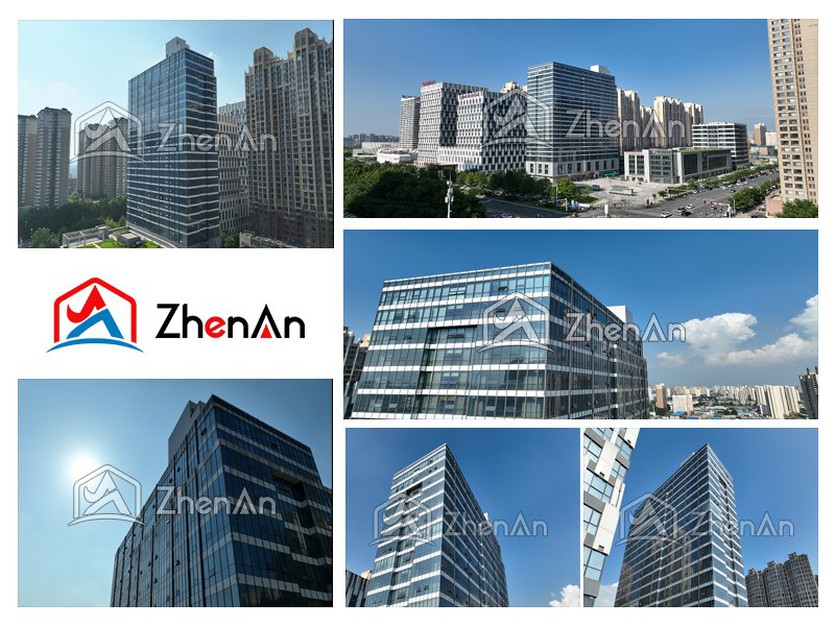
ZHEN AN INTERNATIONAL CO., LIMITED is an enterprise dedicated to silicon carbide (SiC), as well as metallurgical and refractory products, integrating production, processing, sales, and import/export trade.
We are committed to building a professional and dedicated elite team on a global scale, establishing a comprehensive quality control and service system centered around our silicon carbide products. At ZhenAn, we uphold our commitment to providing comprehensive solutions for our customers' production processes by delivering silicon carbide products of the "right quality and quantity."
Our factory covers an area of 30,000 square meters, boasting an annual production and sales volume exceeding 150,000 tons, with a stable monthly supply of 3,000 tons. We are equipped with a complete set of modern production facilities, providing a solid guarantee for the research and development, testing, and quality stability of our silicon carbide products.



FAQ
Q:What is silicon carbide 85 used for in steelmaking?
A:Silicon carbide 85 is mainly used as a deoxidizer, heat-generating additive, and silicon-carbon source in steelmaking. It is commonly used in EAF, BOF, and ladle refining to support oxygen removal and improve furnace heat balance.
Q:Can silicon carbide replace ferrosilicon in steelmaking?
A:Silicon carbide can partially replace ferrosilicon in some steelmaking processes, but it is not always a complete substitute. The replacement ratio depends on furnace type, silicon recovery, carbon control, steel grade, and production cost target.
Q:What is the difference between silicon carbide 85 and silicon carbide 75?
A:Silicon carbide 85 has higher SiC content and is usually selected for better deoxidation efficiency. Silicon carbide 75 is often chosen for cost-sensitive applications. Buyers should compare SiC content, free carbon, Fe₂O₃, moisture, and particle size before ordering.
Q:What particle size is suitable for silicon carbide deoxidizer?
A:Common particle sizes include 0–10mm, 1–5mm, and 10–50mm. Fine grains react faster, while larger lumps are more suitable for furnace charging. The best size depends on feeding method, furnace temperature, and reaction time.
Q:Why choose silicon carbide grains instead of briquettes?
A:Silicon carbide grains usually contain no binder, which helps reduce unwanted impurities and provides faster reaction in molten steel. Briquettes may be easier to handle, but buyers need to check binder content, moisture, ash level, and actual SiC content.
Q:What is the current silicon carbide 85 price?
A:The price of silicon carbide 85 depends on SiC content, particle size, order quantity, packing method, and current raw material market conditions. Please send your required grade, size, quantity, and destination port to get an updated quotation.
Q:Can you supply silicon carbide powder or silicon carbide flour?
A:Yes. In addition to silicon carbide grains and lumps, we can also supply silicon carbide powder, silicon carbide flour, 200 mesh powder, and 325 mesh powder for refractory and furnace lining applications.
Q:Do you provide COA or third-party inspection?
A:Yes. COA can be provided for each batch. Third-party inspection such as SGS or CCIC can also be arranged upon request before shipment.
Hot Tags: silicon carbide 85/75 grains | sic deoxidizer for steelmaking, China silicon carbide 85/75 grains | sic deoxidizer for steelmaking manufacturers, suppliers, factory, Carborundum Grains, silicon carbide nano powder, Black Silicon Carbide, silicon carbide sandblasting media, silicon carbide sandblasting, Solid SiC
You Might Also Like


Send Inquiry