Direct Answer
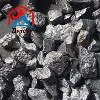
Silicon carbide 90 (SiC 90) significantly improves refractory performance by enhancing oxidation resistance, reducing slag penetration, and extending lining life in high-temperature furnaces.
Background: Severe Wear in High-Temperature Furnace Linings
A steel plant operating high-temperature furnaces and iron trough systems faced persistent refractory issues.
Typical problems included:
- rapid refractory erosion under slag attack
- lining life limited to 20–25 days
- frequent shutdowns for maintenance
- unstable furnace operation
The existing refractory system lacked sufficient resistance to high-temperature oxidation and slag corrosion.
Root Cause Analysis of Refractory Failure
Detailed inspection showed:
- insufficient high-purity silicon carbide content in castables
- oxidation of SiC at temperatures above 1400°C
- deep slag penetration into porous refractory structure
- thermal shock damage due to temperature fluctuation
This resulted in:
- structural weakening of lining
- accelerated wear rate
- increased maintenance frequency
The main issue was inadequate performance of low-grade silicon carbide under severe furnace conditions.
Solution: Upgrading to Silicon Carbide 90 (SiC 90)
To improve furnace lining performance, the plant upgraded to silicon carbide 90 (SiC 90) in the refractory formulation.
Key objectives:
- enhance oxidation resistance
- improve slag corrosion resistance
- increase lining density and strength
Implementation in Refractory Castable System
- SiC 90 used as both aggregate and fine powder
- optimized particle size distribution for better packing
- improved binder system to increase bonding strength
- controlled mixing and curing process
Results: Significant Improvement with SiC 90
1. Extended Lining Life
- service life increased from 20–25 days to 45–60 days
- reduced replacement frequency
2. Improved Slag Resistance
- reduced slag penetration depth
- improved resistance to chemical erosion
3. Better Oxidation Resistance
- slower oxidation rate at high temperature
- improved structural stability
4. Enhanced Thermal Shock Resistance
- reduced cracking under temperature cycling
- improved lining durability
5. Lower Maintenance Cost
- fewer shutdowns
- reduced refractory consumption
- improved overall furnace efficiency
Why Silicon Carbide 90 Performs Better
Higher Purity and Stability
Silicon carbide 90 provides higher purity compared to lower grades, resulting in better high-temperature performance.
Protective Oxidation Layer
SiC forms a protective SiO₂ layer, slowing further oxidation.
Improved Density and Strength
Higher SiC content reduces porosity and increases structural strength.
Superior Slag Resistance
SiC 90 enhances resistance to chemical attack from molten slag and metal.
Where Silicon Carbide 90 Is Most Effective
Silicon carbide 90 (SiC 90) is widely used in:
- iron trough refractory castables
- blast furnace lining systems
- high-temperature industrial furnaces
- ladle working layers
Key Technical Insight
Using higher-grade silicon carbide is critical in severe operating conditions.
For high-temperature and high-corrosion environments:
- silicon carbide 90 provides longer service life
- lower grades may fail prematurely
- overall cost is reduced through longer maintenance cycles
Conclusion
By upgrading to silicon carbide 90, the plant significantly improved refractory performance, extended lining life, and reduced maintenance cost.
For demanding furnace applications, SiC 90 offers a reliable and cost-effective solution.
Get Silicon Carbide 90 for Your Furnace Application
If you are facing:
- refractory erosion
- short lining life
- high maintenance cost
We provide:
- stable silicon carbide 90 supply
- consistent particle size distribution
- technical support for refractory applications
👉 Contact us for specifications, pricing, and application guidance.
FAQ
Q:What is silicon carbide 90 used for?
A:Silicon carbide 90 (SiC 90) is mainly used in refractory castables, iron trough linings, and high-temperature furnaces where strong oxidation resistance and slag corrosion resistance are required.
Q:Why choose silicon carbide 90 instead of lower grades?
A:Silicon carbide 90 offers higher purity and better performance under severe conditions, providing longer lining life and better resistance to slag and oxidation compared to lower-grade silicon carbide.
Q:Is SiC 90 suitable for iron trough applications?
A:Yes, SiC 90 is widely used in iron trough refractory castables because it improves slag resistance, reduces erosion, and extends service life.
Q:How does silicon carbide 90 improve furnace lining life?
A:SiC 90 enhances density, reduces porosity, and forms a protective oxidation layer, which slows down degradation and extends the refractory service life.
Q:Can silicon carbide 90 reduce maintenance cost?
A:Yes, by extending lining life and reducing wear, silicon carbide 90 lowers the frequency of shutdowns and maintenance, reducing overall operational cost.
Q:What is the difference between SiC 88 and SiC 90?
A:SiC 90 has higher purity and better performance in high-temperature and high-corrosion environments, while SiC 88 provides a more cost-effective solution for moderate conditions.
Q:How to choose between 85%, 88%, and 90% silicon carbide?
A:85% is suitable for cost-sensitive applications, 88% offers balanced performance, and 90% is recommended for high-temperature, high-wear environments requiring longer service life.