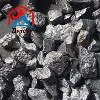
The production of calcined petroleum coke (CPC) involves several steps, typically starting from green petroleum coke (GPC), which is derived from the processing of crude oil in petroleum refineries. Here's a general overview of how CPC is made:
Collection of Green Petroleum Coke (GPC):
GPC is produced during the cracking process in refineries. When crude oil is subjected to high temperatures and different refining processes, heavy hydrocarbons are broken down into lighter fractions, leaving behind GPC as a byproduct.
Pre-Calcining (Optional):
Before calcination, GPC may undergo preprocessing to remove impurities or to break it down into smaller sizes, depending on the specifications required for the final product.
Calcination Process:
Heating: The GPC is heated in a rotary kiln or a calcining furnace at temperatures ranging from 1200°C to 1400°C (approximately 2192°F to 2552°F). This heating process is done in a controlled atmosphere, usually under low oxygen conditions, to prevent combustion.
Removal of Volatile Components: During the heating process, the volatile matter present in GPC is driven off. This includes any remaining hydrocarbons, as well as moisture and other impurities, resulting in a higher carbon content.
Formation of CPC: The heat treatment causes the carbon structure to rearrange, leading to a dense, hard, and graphitic structure that characterizes calcined petroleum coke.
Cooling:
After calcination, the CPC is cooled down. Cooling methods may include air cooling or water quenching, depending on the facility's setup and the specifications for the CPC.
Size Reduction and Screening:
The cooled CPC may be granulated or milled to achieve specific particle sizes required for various applications. It is then screened to separate different size fractions.
Quality Control:
The final product undergoes quality control tests to ensure it meets the required specifications for purity, particle size, and other characteristics.
Packaging and Storage:
Finally, the calcined petroleum coke is packaged and stored for shipment to various industrial users, such as aluminum, steel, and electrode manufacturers.