Silicon carbide is a critical industrial material widely used in metallurgy, foundry, refractory, and high-temperature applications. While its performance characteristics such as hardness and thermal stability are well known, these properties are fundamentally determined by how silicon carbide is produced.
From raw material selection to high-temperature smelting and post-processing, the production process of silicon carbide plays a decisive role in its purity, structure, and industrial reliability. Understanding this process helps industrial buyers better evaluate product quality and supplier capability.
Silicon carbide is primarily produced from silica (SiO₂) and carbon-based materials. High-purity quartz sand is commonly used as the silicon source, while petroleum coke, coal, or graphite serves as the carbon source.
The quality of these raw materials has a direct impact on the final silicon carbide product. Impurities in silica or carbon materials can affect chemical stability and performance. Therefore, experienced manufacturers carefully select and test raw materials to ensure consistent input quality before smelting begins.
The most widely used industrial method for producing silicon carbide is the Acheson process. In this method, silica sand and carbon materials are mixed and heated in an electric resistance furnace at extremely high temperatures, often exceeding 2,000°C.
Under these conditions, silicon dioxide reacts with carbon to form silicon carbide and carbon monoxide gas. This process results in the formation of silicon carbide crystals with strong covalent bonding, which gives the material its characteristic hardness and thermal resistance.
The smelting process is the core stage of silicon carbide production. Furnace temperature, reaction time, electrical power stability, and cooling conditions all influence crystal formation and purity.
Proper control of smelting parameters ensures complete reactions and stable crystal growth. Poor control may lead to incomplete reactions, uneven crystal structure, or excessive impurities. This is why production experience and furnace management are critical factors in producing reliable industrial-grade silicon carbide.
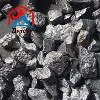
After smelting, silicon carbide is typically obtained in large solid blocks. These blocks must undergo crushing, screening, and grading to produce usable industrial products.
Controlled crushing ensures proper particle shape and internal structure, while screening separates material into different size ranges for specific applications. Some applications require coarse particles, while others require fine or customized sizes. Consistent processing helps ensure predictable performance in metallurgical and refractory use.
Quality control is applied at every stage of production, from raw material inspection to final packaging. Chemical composition testing ensures SiC content meets grade requirements, while particle size analysis verifies size consistency.
In addition, experienced manufacturers monitor furnace operation, processing conditions, and batch consistency to reduce variability. Effective quality control ensures that silicon carbide performs reliably in industrial environments, where inconsistent quality can lead to production instability.

Conclusion
Silicon carbide is produced through a high-temperature smelting process that creates a strong covalent crystal structure responsible for its hardness, thermal stability, and industrial reliability. From raw material selection to furnace operation and post-processing, each step plays a critical role in determining final product quality.
Understanding how silicon carbide is produced helps industrial users better evaluate material performance and supplier capability. By choosing a supplier with strong production control, quality assurance, and logistics expertise, users can fully benefit from the long-term performance and economic advantages of silicon carbide in demanding industrial applications.
Our company's advantages in supplying silicon carbide
As an experienced supplier in the metallurgical raw materials industry, we focus on producing and supplying silicon carbide with stable quality and consistent performance.
With long-term production experience, we operate integrated smelting, crushing, and screening systems. This allows us to control raw material selection, furnace parameters, reaction conditions, and particle size distribution, ensuring uniform quality across batches.
Unlike suppliers who rely mainly on spot trading, our production-based supply model enables us to provide stable long-term supply and flexible specifications, including different grades and particle sizes for metallurgy, foundry, and refractory applications.
We also place strong emphasis on packaging and transportation, which are essential for preserving product quality. Our silicon carbide products are packed in moisture-resistant, durable packaging such as 25 kg bags or 1 MT jumbo bags. This minimizes contamination, moisture absorption, and degradation during long-distance transportation.
By combining controlled production, consistent quality, and professional export logistics, we help customers reduce procurement risks and maintain stable industrial performance.