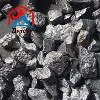
During smelting, it is necessary to always pay attention to and grasp the changes in silicon content of the ferrosilicon being smelted to prevent waste products. Therefore, correctly grasping the changing trend of silicon content and appropriately adjusting silicon content is one of the only tasks for smelting workers.
The low silicon content of ferrosilicon is related to the following factors:
1. The furnace condition is too sticky or the electrode insertion depth is shallow, causing serious ignition, large heat loss, low furnace temperature, and silicon dioxide cannot be fully reduced.
2. The sudden addition of rusty and powdery steel scraps, or the addition of steel scraps that are too short, can easily reduce the silicon content in ferrosilicon.
3. Too much recycled iron or steel chips are added.

4. Insufficient smelting time leads to iron tapping or "missing".
5. Burn out the taphole and consume too much round steel.
Whenever the silicon content of ferrosilicon is lower than 74%, it should be adjusted. Several batches of charge without steel scraps can be added as appropriate to increase the silicon content in ferrosilicon.

When the furnace condition is normal and the silicon content of ferrosilicon is greater than 76% and there is an upward trend, steel scraps should be added to reduce the silicon content in ferrosilicon. Practical experience has proven that for larger-capacity submersible arc furnaces to smelt 75% ferrosilicon, 50 to 60 kilograms of steel scraps can be added for every 1% silicon reduction. Additional steel scraps should be added to the furnace core or large surface, but not to the material surface of the taphole phase electrode.