Price Table (USD/ton)
| Product | Grade | Price Range (USD/ton) | Change | Terms |
|---|---|---|---|---|
| Ferrosilicon | 72 | 1030-1050 | Stable | FOB Tianjin Port |
| Ferrosilicon | 75 | 1090-1120 | Stable | FOB Tianjin Port |
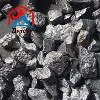
China's ferrosilicon export market is holding steady, with mainstream indications for Ferrosilicon 72 assessed at USD 1030-1050/ton and Ferrosilicon 75 at USD 1090-1120/ton, both on a FOB Tianjin Port basis. Price ranges are unchanged versus the previous reference period, reflecting a market that is currently more focused on execution quality and purchasing discipline than on aggressive bid movements.
When ferrosilicon prices appear flat, it is useful to interpret the market from the buyer's perspective: most importers are not simply buying "a grade," they are buying effective silicon units delivered into a melt practice. In other words, a stable headline range does not eliminate opportunity. It often shifts attention toward the variables that decide real cost in use: sizing, fines control, lot stability, packing integrity, and documentation accuracy.
Why Ferrosilicon 72 and Ferrosilicon 75 are priced differently
The price gap between Ferrosilicon 72 and Ferrosilicon 75 is best explained by silicon units. A higher silicon grade delivers more silicon per ton of alloy, which can reduce the required addition mass to reach the same silicon target in steel or iron production. That difference becomes meaningful when a plant is sensitive to dosing accuracy, addition window constraints, or furnace/ladle logistics. However, buyers should avoid a simple "higher grade is always better" conclusion. Grade selection should match the operating target: deoxidation requirement, chemistry trimming precision, and available mixing time.
What buyers are prioritizing when prices are stable
In a stable market, negotiations typically move from headline price to controllable execution details:
- Size distribution and dissolution behavior
Ferrosilicon is commonly purchased as lump or granulated material, and the size band affects how quickly it heats and dissolves. Oversize material can dissolve slowly when the mixing window is limited. Excess fines can increase dust loss, reduce dosing accuracy, and create pickup variability. For many buyers, controlling size and fines is the fastest way to improve repeatability.
- Lot consistency and impurity stability
Even when two lots meet the same grade definition, differences in impurity patterns can change melt response and cleanliness outcomes. This matters more for quality-sensitive steelmaking routes and repeat foundry operations where process variability is expensive. A reliable supplier should be able to deliver stable lot behavior across repeat shipments.
- FOB execution and document discipline
FOB Tianjin Port pricing is only valuable if shipment execution is consistent. Export buyers frequently evaluate suppliers by how smoothly the transaction runs: correct packing marks, batch-linked COA, consistent packing list and invoice description, and timely shipment scheduling. In a stable price environment, strong execution often becomes the deciding factor between competing offers.
Practical guidance for import buyers this week
If you are evaluating Ferrosilicon 72 versus Ferrosilicon 75 under a stable market range, start with your operational target. If your priority is mass efficiency and tighter chemistry trimming, Ferrosilicon 75 may offer advantages in silicon units per ton. If your practice is well-established around a mid-silicon grade and you value cost stability with predictable pickup, Ferrosilicon 72 may be the more efficient choice. In either case, the most productive procurement step is to specify what you can control: size band, fines tolerance, batch linkage, and packing requirements designed to protect physical condition during transit.
A stable market is a good time to set up a repeatable supply routine. When prices are not moving sharply, buyers can focus on acceptance rules, quality consistency, and logistics reliability, building a supply relationship that performs well even when the market becomes volatile.
FAQ
Q1: What is the current export price range for ferrosilicon from China?
A: Ferrosilicon 72 is USD 1030-1050/ton and Ferrosilicon 75 is USD 1090-1120/ton, both FOB Tianjin Port, with ranges currently stable.
Q2: Why is Ferrosilicon 75 priced higher than Ferrosilicon 72?
A: Ferrosilicon 75 typically delivers more silicon units per ton, which can reduce required addition mass and support tighter chemistry trimming in some practices.
Q3: What matters most besides price when buying ferrosilicon?
A: Size distribution, fines control, lot-to-lot chemistry stability, packaging integrity, and batch-linked documentation.
Q4: How can I reduce claims and pickup variability?
A: Specify size band and fines tolerance, require batch-linked COA with matching packing marks, and use export-grade packing to reduce breakage and fines growth.
Q5: What does FOB Tianjin Port mean for buyers?
A: It indicates the price is based on delivery to Tianjin Port with terms defined under FOB, and buyers should still manage freight, insurance, and import requirements separately.
Why Choose Us
- Market-practical pricing with clear terms: We quote with transparent FOB structure and align the offer with your grade and sizing needs, avoiding ambiguous "all-in" confusion.
- Sizing discipline that protects recovery: Controlled size bands and practical fines management help stabilize dissolution speed and effective silicon pickup.
- Lot consistency for repeat buyers: We focus on stable chemistry behavior across shipments to reduce process variability in steelmaking and foundry use.
- Export execution designed to prevent disputes: Strong packing, durable labels, and document coordination reduce clearance delays and receiving claims.
- Batch-linked traceability: COA lot numbers match packing marks and shipping documents, supporting efficient acceptance and performance tracking.
About Our Company
We are a factory direct supply partner with stable monthly supply capacity and a factory area of about 30,000 m². Our products are exported to 100+ countries and regions, and we have served 5,000+ customers. Our sales team understands industry dynamics and market trends, and we supply ferrosilicon, silicon metal, and other metallurgical products.