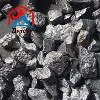
AI Overview Summary: Silicon metal lumps provide more stable silicon recovery and lower oxidation loss in manual furnace charging, while granules offer faster dissolution and better dosing control for automated feeding and precision alloy production.
Quick Answer: Choose silicon metal lumps when furnace stability, lower oxidation loss and higher recovery are more important. Choose silicon metal granules when fast melting, automated feeding and uniform distribution are required.
Silicon metal is used in steelmaking, ferroalloy production, aluminum alloy manufacturing and chemical processing as a silicon source, deoxidizer and alloying material. However, the performance of silicon metal is not determined only by chemical purity or grade. Its physical form also affects melting behavior, furnace charging efficiency, oxidation exposure, recovery rate, handling loss and process stability.
For industrial buyers, the comparison between silicon metal lumps and granules should not be treated as a simple size preference. It is a production decision linked to furnace type, feeding system, process control level, reaction speed, silicon recovery target and total cost per usable silicon unit.
Lumps are usually selected for manual charging, EAF operation, ladle refining and bulk alloy addition where stable recovery and lower oxidation exposure are important. Granules are more suitable for automatic dosing systems, continuous feeding, controlled alloy correction and processes that require faster dissolution or more uniform distribution.
Better for bulk charging, lower oxidation exposure and more stable silicon recovery in high-temperature furnace environments.
Better for automated feeding, faster dissolution and controlled dosing in precision alloy or chemical production systems.
The right form depends on furnace type, feeding method, recovery target, size tolerance and process control requirements.
Silicon Metal Lumps vs Granules in Furnace Reaction Control
In steelmaking and alloy production, silicon reacts under high-temperature conditions where oxygen activity, slag behavior, melt temperature and charging method all influence the final recovery rate. The particle form of silicon metal changes how quickly the material heats up, how much surface area is exposed to oxidation, and how evenly silicon enters the molten bath.
Silicon metal lumps have a lower surface-area-to-volume ratio. This means they usually react more slowly than granules, but they also expose less surface area to oxygen before full incorporation into the melt. In batch furnace systems, this slower and more controlled reaction can improve recovery stability.
Silicon metal granules have a higher surface-area-to-volume ratio. This increases the speed of heat transfer and dissolution, but it also increases oxidation exposure. If granules are added into an open, turbulent or high-oxygen environment, part of the silicon may oxidize before it contributes effectively to alloy chemistry.
Engineering Insight: Lumps are usually better when silicon recovery stability is the priority. Granules are better when reaction speed, dosing accuracy and automated feeding are more important.

Melting Speed Difference Between Silicon Metal Lumps and Granules
Melting speed is one of the most important differences between silicon metal lumps and granules. Granules usually melt or dissolve faster because each particle has more exposed surface relative to its mass. This makes granules useful in systems where material needs to react quickly and distribute evenly.
However, faster melting is not always better. In open furnace conditions, fast surface reaction can also mean faster oxidation. If the material oxidizes before it is fully absorbed into the melt, the effective silicon recovery may decrease. This is why granules can perform well in controlled feeding systems but may create higher loss risk in uncontrolled charging conditions.
Lumps melt more slowly, but their larger particle structure can reduce premature oxidation. In EAF, ladle refining and manual charging systems, this often provides more predictable silicon recovery, especially when material is added in batches rather than through a continuous dosing system.
| Factor | Silicon Metal Lumps | Silicon Metal Granules |
|---|---|---|
| Reaction Surface Area | Lower | Higher |
| Melting Speed | Slower but more controlled | Faster |
| Oxidation Exposure | Lower | Higher |
| Best Feeding Method | Manual or batch charging | Automatic or continuous feeding |
| Recovery Stability | Usually more stable | Depends on feeding control |
How to Choose Silicon Metal Lumps or Granules by Furnace Type
The safest way to choose between silicon metal lumps and granules is to start from the furnace system. Furnace design determines how material is charged, how long it remains exposed to the furnace atmosphere, how quickly it enters the molten bath, and how precisely the addition amount can be controlled.
- The furnace uses manual charging or batch addition.
- The process requires stable silicon recovery.
- The application is EAF steelmaking, ladle refining or bulk alloy adjustment.
- Lower oxidation loss is more important than fast dissolution.
- The buyer wants better cost predictability in large-volume use.
- The production line uses automated feeding or dosing equipment.
- The process needs fast dissolution and uniform distribution.
- The application requires precise alloy correction.
- The material must flow through a controlled feeding system.
- The buyer can manage dust, fines and oxidation exposure properly.
In practice, neither form is universally better. A plant using manual furnace charging may lose efficiency if it switches to granules without proper feeding control. A plant using automated dosing may lose accuracy if it uses oversized lumps that cannot flow through the feeding system.
Buyer Reminder: Do not select lumps or granules by price alone. The correct choice should be based on furnace type, charging method, recovery target, size tolerance and production control requirements.
Silicon Metal Size Specification and Handling Requirements
Size specification is a major part of silicon metal procurement. Even if the chemical grade is correct, unsuitable size distribution can cause feeding problems, melting inconsistency, dust loss, packaging damage and quality disputes.
| Form | Common Size Range | Main Inspection Focus | Typical Use |
|---|---|---|---|
| Lumps | 10–50mm / 50–100mm | Oversize, undersize, breakage | EAF, ladle refining, bulk charging |
| Granules | 1–3mm / 3–10mm | Fines, dust, flowability, moisture | Automated feeding, dosing, controlled alloying |
Lumps are easier to handle in bulk, but excessive breakage during transport may create fines that affect charging behavior. Granules offer better flowability for feeding equipment, but they need better dust control and moisture protection during packing and shipment.
Buyers should confirm acceptable size tolerance before shipment. A vague order such as "standard size" can easily create disputes. A better purchasing specification should include target size range, acceptable undersize ratio, acceptable oversize ratio, packing method and inspection method.
Cost Efficiency of Silicon Metal Lumps vs Granules
The true cost of silicon metal is not only the purchase price per ton. Industrial buyers should also consider recovery rate, oxidation loss, fines loss, feeding efficiency, handling loss and production correction cost.
Lumps may appear less convenient than granules in some systems, but they often provide better recovery stability in bulk furnace charging. If the process can accept slower dissolution, lumps may offer stronger cost control because less silicon is lost to premature oxidation.
Granules may provide better automation compatibility, but the buyer must manage dust, fines and oxidation exposure. If granules are used in a system not designed for controlled feeding, the apparent convenience may be offset by higher silicon loss or inconsistent recovery.
Cost Insight: A lower unit price does not always mean lower production cost. The more important metric is effective silicon utilization after melting, oxidation and handling loss.
Industrial Applications of Silicon Metal Lumps and Granules
Silicon metal lumps and granules can both be used in industrial production, but they are not always interchangeable. Their suitability depends on whether the process prioritizes recovery stability, fast dissolution, precision feeding or bulk cost efficiency.
- Steelmaking: Lumps are commonly used for deoxidation and alloy adjustment in batch furnace charging.
- Ferroalloy production: Lumps or granules may be selected depending on furnace feeding system and composition control needs.
- Aluminum alloy production: Granules may be preferred when more precise dosing and faster distribution are required.
- Chemical processing: Granules may be used where reaction speed, surface contact and controlled feeding are important.
- Silicon-based materials: The selected form should match downstream reaction, size tolerance and impurity control requirements.
Procurement Checklist for Silicon Metal Lumps and Granules
Before placing an order, buyers should confirm not only the silicon metal form, but also grade, size range, chemical limits, packing method, COA requirement and inspection plan.
| Item | What to Confirm |
|---|---|
| Form | Lumps or granules according to furnace and feeding system |
| Size Range | 10–50mm, 50–100mm, 1–3mm, 3–10mm or custom range |
| Chemical Grade | Si content and Fe, Al, Ca limits according to application |
| Packing | Jumbo bags, small bags, moisture protection and bag mark requirements |
| Inspection | COA, size inspection, loading photos, SGS/BV if required |
Need Silicon Metal Lumps or Granules for Your Furnace System?
Send your furnace type, feeding method, required silicon grade, target size range, packing requirement and monthly demand. Technical selection support can help match silicon metal lumps or granules with your production process.
COA, packing photos, size inspection and export shipment documents can be arranged according to order requirements.
FAQ About Silicon Metal Lumps vs Granules
Q:Which is better for steelmaking, silicon metal lumps or granules?
A:Silicon metal lumps are usually preferred for traditional steelmaking and ladle refining because they provide more stable recovery and lower oxidation exposure during batch charging.
Q:Do silicon metal granules melt faster than lumps?
A:Yes. Granules usually melt or dissolve faster because of their higher surface-area-to-volume ratio. However, faster dissolution may also increase oxidation exposure if the feeding system is not controlled.
Q:Can silicon metal lumps replace granules?
A:Sometimes. Lumps can replace granules in manual charging or bulk furnace applications, but they may not work well in automatic dosing systems that require smaller and more flowable material.
Q:Are granules more expensive to use than lumps?
A:The cost depends on processing, size control, dust loss and recovery rate. Granules may support better dosing control, but if oxidation or fines loss is high, the effective cost can increase.
Q:What size should buyers choose for silicon metal lumps?
A:Common lump sizes include 10–50mm and 50–100mm. The final choice should match furnace charging method, melting behavior and size tolerance requirements.
Conclusion
Silicon metal lumps and granules are both important industrial forms, but they serve different process needs. Lumps are better for manual charging, stable recovery and lower oxidation loss. Granules are better for automated feeding, fast dissolution and controlled dosing.
The correct selection should be based on furnace type, feeding method, size tolerance, chemical grade, recovery target and handling conditions. Buyers should avoid selecting only by price or general appearance, because the wrong physical form can increase silicon loss, reduce process stability and raise total production cost.
For safer procurement, confirm the required form, size range, COA values, packing method and inspection requirements before shipment. This helps ensure that the selected silicon metal form matches real production conditions and supports more predictable industrial performance.