Quick Answer: Choose Silicon Metal 1101 for stricter impurity control, 2202 for lower aluminum sensitivity, and 3303 for balanced Fe/Al/Ca control in industrial use.
Silicon Metal 1101, 2202 and 3303 are widely used in metallurgy, aluminum alloy production, chemical processing and silicone-related industries. Although these grades all belong to high-silicon industrial materials, they are not selected in the same way.
For industrial buyers, the key question is not simply which grade is "better". The real question is which grade matches the target application, impurity tolerance, furnace practice, feeding size, cost range and inspection requirement.
In most procurement decisions, buyers compare Silicon Metal 1101, 2202 and 3303 according to Fe, Al and Ca limits. These impurity elements can affect downstream alloy composition, chemical reaction control, melting behavior and final product consistency. A correct grade selection helps reduce quality disputes, unnecessary cost and production instability.
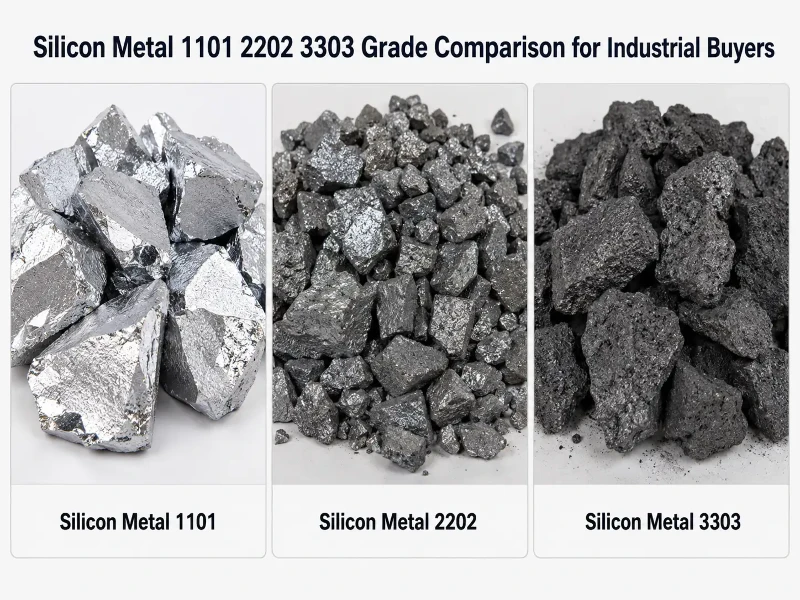
Used when stricter Fe, Al and Ca control is required for higher-purity industrial applications.
Selected when controlled Al and stable Fe/Ca limits are needed without using the strictest grade.
Often used for balanced industrial performance, chemical use and cost-sensitive applications.
Silicon Metal 1101 Vs 2202 Vs 3303: Quick Grade Comparison
Silicon Metal 1101, 2202 and 3303 are usually differentiated by impurity control, especially Fe, Al and Ca. The lower the impurity limits, the stricter the grade control usually is.
| Grade | Typical Si Content | Fe Limit | Al Limit | Ca Limit | Typical Selection Purpose |
|---|---|---|---|---|---|
| Silicon Metal 1101 | ≥99% | ≤0.10% | ≤0.10% | ≤0.01% | Stricter impurity control and higher purity applications |
| Silicon Metal 2202 | ≥99% | ≤0.20% | ≤0.20% | ≤0.02% | Applications requiring controlled Al and stable Fe/Ca limits |
| Silicon Metal 3303 | ≥99% | ≤0.30% | ≤0.30% | ≤0.03% | Balanced cost, supply stability and industrial impurity control |
Technical Note: The grade name is only a starting point. Buyers should confirm the actual Fe, Al, Ca and trace element limits by COA before shipment.
From a buyer's perspective, Silicon Metal 1101 is often selected when stricter chemical control is needed. Silicon Metal 2202 is commonly used when impurity limits are still important but the application does not require the strictest grade. Silicon Metal 3303 is often considered when buyers need stable industrial supply with balanced Fe, Al and Ca control.
How To Choose Silicon Metal 1101, 2202 Or 3303 By Application
The best silicon metal grade should be selected according to the downstream process, not only according to price. Different applications may have different tolerance for Fe, Al, Ca and other trace elements.
Chemical And Silicone-Related Applications
Buyers usually pay close attention to impurity consistency. Silicon Metal 3303 may be suitable for some chemical applications, but additional trace element limits should be confirmed according to the downstream process.
Aluminum Alloy Production
Aluminum sensitivity should be reviewed carefully. If the process has stricter Al or Ca limits, buyers may need Silicon Metal 2202 or 1101 instead of a general grade.
Metallurgical Applications
The selection depends on furnace practice, target alloy chemistry and impurity tolerance. Some buyers use 3303 for general use, while others require 2202 or 1101 for cleaner input.
Cost-Sensitive Industrial Use
Silicon Metal 3303 may be practical when the process can accept its Fe, Al and Ca range. However, the wrong grade may cause correction cost, rejection or additional testing.
Key Differences In Silicon Metal Fe, Al And Ca Control
Fe, Al and Ca are the main indicators buyers usually compare when selecting Silicon Metal 1101, 2202 and 3303. These elements should be checked according to the buyer's final product and process sensitivity.
Iron can affect alloy chemistry and downstream product consistency. In applications where iron input must be limited, buyers usually prefer a lower-Fe grade such as 1101 or 2202.
Aluminum control is important when the final product already has strict aluminum limits. Selecting a grade with better Al control can reduce correction work.
Calcium can affect melting behavior, slag interaction and chemical process stability depending on the application. Lower Ca grades are often preferred when cleaner chemistry is needed.
Buyer Reminder: Do not judge silicon metal only by grade name. Always compare COA values, contract specifications and the actual tolerance of your process.
Silicon Metal Size Selection For Industrial Feeding
Grade selection is only one part of silicon metal procurement. Size selection is also important because it affects feeding, melting, storage, handling and loss control.
| Size Range | Typical Use |
|---|---|
| 10–50mm | Common industrial feeding size for many metallurgical and chemical users |
| 50–100mm | Suitable when larger lump size is preferred for handling or furnace practice |
| 0–10mm / Granules | Used when smaller particle size is required for specific processing needs |
| Custom Size | Used when buyers have special feeding, packing or melting requirements |
For many trial orders, 10–50mm is a practical starting size because it balances handling convenience and feeding performance. However, the final size should be confirmed according to furnace type, feeding system, downstream process and buyer experience.
Buyers should also confirm whether undersize and oversize tolerance is acceptable. Size disputes are common in industrial raw material purchasing, so the size range should be written clearly in the purchase contract.
Procurement Checklist For Silicon Metal 1101, 2202 And 3303 Buyers
Before confirming an order for Silicon Metal 1101, 2202 or 3303, buyers should review more than just the price. A complete checklist helps reduce misunderstanding between supplier and buyer.
| Item | What To Confirm |
|---|---|
| Grade | 1101, 2202, 3303 or other required grade |
| Chemical Limits | Si, Fe, Al, Ca and any additional trace element requirements |
| Application | Metallurgy, aluminum alloy, chemical, silicone-related or other industrial use |
| Size Range | 10–50mm, 50–100mm, granules or custom size |
| Packing | Jumbo bags, small bags, palletized packing or buyer-specific packing |
| COA | Batch COA before shipment |
| Inspection | SGS, BV or other third-party inspection if required |
| Shipment | Destination port, delivery schedule and container loading plan |
Recommended Silicon Metal 1101 Vs 2202 Vs 3303 Selection Rule
Choose Silicon Metal 1101 when stricter impurity control is required and Fe, Al or Ca variation may affect the final product.
Choose Silicon Metal 2202 when the application needs controlled Fe, Al and Ca levels but does not require the strictest grade.
Choose Silicon Metal 3303 when the buyer needs balanced industrial performance, stable supply and acceptable Fe/Al/Ca control for chemical, metallurgical or general industrial use.
This rule should be treated as a starting point, not a final technical standard. Final selection should always be based on the buyer's process requirements, COA review, sample testing and contract specifications.
Need Silicon Metal 1101, 2202 Or 3303?
Send your required grade, Fe/Al/Ca limits, size range, packing method, monthly demand and destination port. COA, packing photos, shipment documents and third-party inspection support can be arranged according to order requirements.
Recommended inquiry information: grade, chemical limits, size range, packing method, trial order or monthly demand, destination port and inspection requirement.
FAQ About Silicon Metal 1101, 2202 And 3303
Is Silicon Metal 1101 always better than 3303?
No. Silicon Metal 1101 has stricter impurity control, but it is not always the best choice for every application. If the downstream process can accept the Fe, Al and Ca range of 3303, then 3303 may be more practical from a cost and supply perspective.
What is the main difference between Silicon Metal 1101, 2202 and 3303?
The main difference is the control level of Fe, Al and Ca. Silicon Metal 1101 has stricter impurity limits, 2202 is in the middle range, and 3303 provides balanced impurity control for many industrial applications.
Which silicon metal grade is suitable for chemical applications?
Silicon Metal 3303 is often considered for chemical or silicone-related applications, but buyers should confirm the required Fe, Al, Ca and trace element limits according to their own process. Some chemical users may require stricter grades.
Which silicon metal size is commonly used for trial orders?
10–50mm is commonly selected for trial orders because it is practical for many feeding and handling conditions. The final size should still match the buyer's furnace, feeding system or downstream process.
Why should buyers request COA before shipment?
COA helps buyers verify Si content, Fe, Al, Ca and other agreed indicators before shipment. It also supports batch traceability and reduces quality disputes during international procurement.
Can Silicon Metal 2202 replace 1101?
Sometimes, but not always. If the application can accept the Fe, Al and Ca limits of 2202, it may be a suitable alternative. If stricter impurity control is required, 1101 should still be selected.
Supply Support For Silicon Metal Buyers
For Silicon Metal 1101, 2202 and 3303 purchasing, technical confirmation should be completed before shipment. Buyers should provide the required grade, chemical limits, size range, packing method and inspection requirements.
Export packing, COA, loading photos, shipment documents and third-party inspection coordination can help buyers manage quality control and international logistics more efficiently.
A good silicon metal order should not be based only on grade name. It should be based on application, impurity limits, size tolerance, documentation and stable supply capability.
Conclusion
Silicon Metal 1101, 2202 and 3303 should be selected according to application requirements, Fe/Al/Ca control, size range and procurement documentation.
1101 is suitable for stricter impurity control. 2202 is useful when stable Fe, Al and Ca control is needed without selecting the strictest grade. 3303 is often selected for balanced industrial use, chemical applications and cost-sensitive production where its impurity range is acceptable.
For safer procurement, buyers should compare the specification table, review COA, confirm size tolerance and match the grade with the actual downstream process before placing an order.