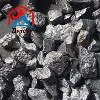
Due to different uses, industrial silicon is divided into various specifications. According to the content of iron, aluminum and calcium in metalloid silicon, metalloid silicon can be divided into different brands such as 553, 441, 411, 421, 3303, 3305, 2202, 2502, 1501, 1101 and so on. Additional products of non-metallic silicon include microsilica powder, edge silicon, black silicon, metallic silicon slag, etc. Among them, microsilica fume is also called microsilica fume and is widely used in the refractory and concrete industries.

The raw materials for smelting industrial silicon mainly include silicon dioxide and carbonaceous reducing agents. Since the contents of aluminum, calcium, and iron in industrial silicon are strictly limited, the requirements for raw materials are also particularly strict. In silica, SiO2>99.0%, Al2O3<0.3%, Fe2O3<0.15%, CaO<0.2%, MgO<0.15%; particle size is 15-80mm.

The principles for selecting carbon-containing reducing agents are: high fixed carbon, low ash content, and good chemical activity. Low-ash petroleum coke or pitch coke is usually used as the reducing agent. However, due to the low resistivity and poor reactivity of these two types of coke, part of the petroleum coke must be replaced with charcoal (or wood blocks) with low ash content, high resistivity, and strong reactivity. In order to sinter the charge, some low-ash bituminous coal should also be added. It must be pointed out that excessive or complete use of charcoal will not only increase product costs, but also cause disordered furnace conditions, such as stinging and collapse due to poor sintering of the material surface, making it difficult to form a blast furnace. In the high-temperature reaction zone, SiC layer is easily formed at the furnace bottom, making it difficult to tap steel.