Q&a
A common buyer question is: "How much silicon metal should we add?" In aluminum casting and alloy adjustment, the correct answer depends on target chemistry, melt weight, and recovery rate. This article provides a practical calculation method and explains how grade and sizing influence real results-especially when using Silicon Metal 1101 for premium stability or Silicon Metal 2202 for reduced Al influence.
1) Key variables you need
Melt weight (W, kg)
Current silicon content (Si₁, %)
Target silicon content (Si₂, %)
Expected recovery (R, 0–1), based on your furnace and feeding practice
Recovery represents how much of the added silicon actually becomes effective silicon in your melt. Recovery is affected by oxidation loss, dust/fines, and feeding method.
2) Practical formula (buyer-friendly)
Required silicon metal (kg) ≈ W × (Si₂ − Si₁) / R
(Use Si% as decimals, e.g., 1.2% = 0.012)
3) Example 1 (typical adjustment)
W = 5,000 kg
Si₁ = 0.6% (0.006)
Si₂ = 1.2% (0.012)
Assume R = 0.85
Required ≈ 5000 × (0.012 − 0.006) / 0.85
= 5000 × 0.006 / 0.85
= 30 / 0.85 ≈ 35.3 kg
4) Example 2 (larger furnace, conservative recovery)
W = 10,000 kg
Si₁ = 0.8%
Si₂ = 1.6%
R = 0.80
Required ≈ 10000 × 0.008 / 0.80 = 100 kg
5) Why your calculated amount still "misses" sometimes
If your result is inconsistent, the problem is usually not math-it's execution:
Too many fines → higher oxidation loss → lower effective recovery
Oversize lumps → delayed dissolution → chemistry measurement timing mismatch
Moisture exposure → handling issues and variability
To improve stability, buyers often specify screened sizes and demand better packing.
6) How grade choice supports stability
1101: chosen when buyers want premium stability; helpful for reducing variability when the cost of inconsistency is high.
2202: helps when Al influence matters; but the benefit is meaningful only if sizing and feeding are stable.
3303: more common for chemical stability discussion; for casting focus, 1101/2202 are typical.
7) Simple operational tips to increase recovery
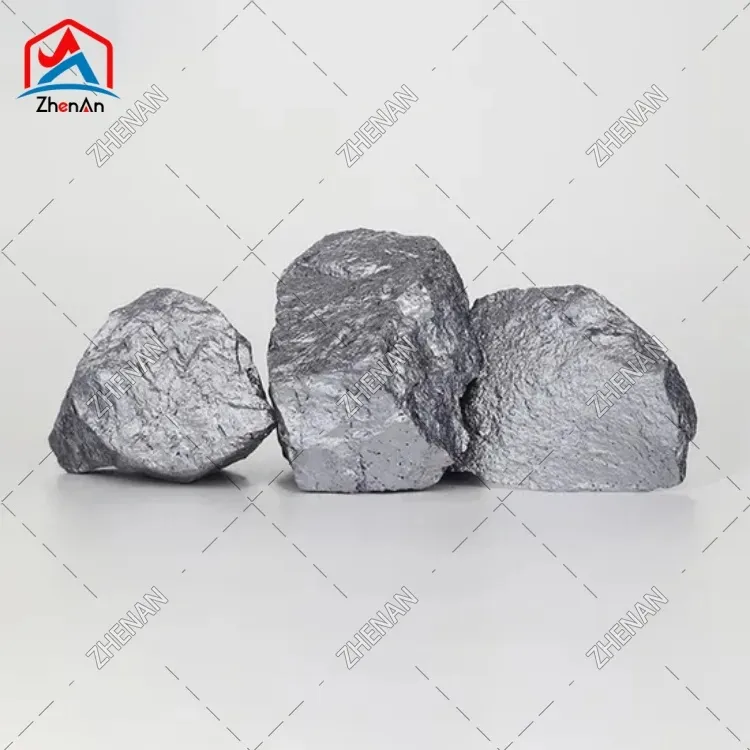
Start with stable size (often 10–50mm for balance)
Reduce fines; request screened sizing
Keep packing dry; avoid moisture exposure
Feed consistently and mix adequately
Track your historical recovery and adjust R over time
FAQ
Q:What recovery should I use if I have no data?
A:Start conservatively (e.g., 0.80–0.85) and adjust based on trial results.
Q:Does smaller size always improve recovery?
A:It increases melting speed but can increase oxidation if fines are high-balance is key.
Q:Why is silicon pickup delayed?
A:Often due to oversize lumps or insufficient mixing time.
Q:Should I choose 1101 for all casting?
A:Not always; choose based on sensitivity and stability cost.
Q:Can you help estimate size and feeding plan?
A:Yes-share furnace type, feeding method, and target Si.

Company Introduction
We are a chemical & metallurgical materials factory supplying silicon metal for overseas casting and alloying buyers. We support stable lot supply, consistent sizing options, and export packaging that helps customers improve recovery and reduce chemistry fluctuation.